Thursday, January 11, 2007

Guardian Interview with Raymond Van Barneveld


Donald McRae Tuesday January 9, 2007 The Guardian

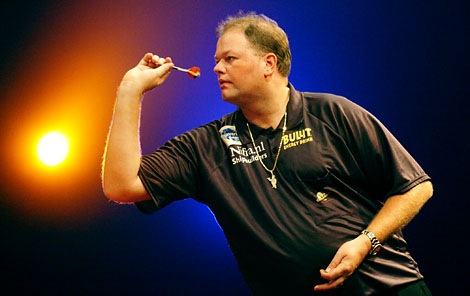
Last Friday night, as the red wine flowed at the end of a long and emotional week in which he had become world champion after winning the greatest match in the history of darts, Raymond van Barneveld contemplated the madness of his new life. "I can't believe there are people out there who actually want to be Ray van Barneveld," the meaty 39-year-old former postman from The Hague murmured. His defeat of Phil Taylor on New Year's Day, in an epic encounter which gripped even darts sceptics flicking through the channels, unfolded in the tumult of the Circus Tavern in Purfleet. Four nights later, in a much quieter corner of a pub in Tynemouth, Van Barneveld suggested that "people want to have heroes, whether they're footballers or singers or darts players. But it still feels strange that a lot of people want my success, my lifestyle, everything. Then I remember that when I was growing up I wanted to be Eric Bristow, the Crafty Cockney. He was world champion so many times, an entertainer who people loved. I wanted that myself." He took another swig and rolled the Cabernet Sauvignon round his mouth as he remembered the match which sealed his own transformation from postman to millionaire. "It was the best I ever played. It had to be because Phil Taylor is the complete player with such dedication. Last year, the morning after he became world champion again, he rang [fellow English darts professional] Adrian Lewis and said 'You're five minutes late for practice.' I had to go into solid training myself for three months - all day, every day. I was on the treadmill each morning and I went track running too, an hour a day. You need that fitness because you have to play Phil on stage for three hours, sweating, staying concentrated." Three years ago Andy "The Viking" Fordham faced Taylor in a hugely anticipated television extravaganza. In the end, roared on by the sumptuous commentary of Sid Waddell, Fordham's massive girth did little more than fulfil the usual quips about darts being an overblown joke of a sport. According to Waddell, Fordham was "sweating under the lights like a hippo in a power shower" when he suffered an asthma attack and had to retire while trailing 5-2. The battle between Taylor and Van Barneveld was, in contrast, a genuine test of will which saw the Dutchman produce a remarkable comeback to defeat the 13-times world champion in a sudden-death 7-6 finish. "To do this I even had to take up meditation to prepare myself for this championship. And that kept me calm even when he played unbelievable and I was 3-0 down. I stayed cool because I just felt that it could still be my night. "Several players came to me afterwards and said 'Thank you, Ray, you've given us hope that Phil is beatable'. I said 'Yeah, but to beat him you need 21 180s'. You also need an angel on your shoulder. On the morning of the final I was sitting alone on my bed and had a vision. It came to me and a voice said 'Ray, you are going to get three darts for tops and you will hit double top because you are turning 40 this year'. That's what happened." Van Barneveld shuddered at his darting spirituality, before he turned to the more human form of his gracious opponent. "In the middle of the night Phil sent me a text. I've still got it: 'Ray, that was marvellous. What a great final. All the best and hope you have a wonderful reception in Holland.' I texted him back: 'Phil, you're such a true sportsman and I love you for that. If you ever stop playing darts you deserve a statue in your honour. I will kneel for my king'." I laughed but he immediately said: "No! I'm serious! That's what beating Phil meant to me in the PDC [Professional Darts Corporation]. I had won four world championships in the BDO [the rival and less exalted British Darts Organisation] but every time people said 'Yeah, but you didn't beat the best player of all time - Phil Taylor'. That was the main reason I switched to the PDC last year - and this makes it the biggest ever moment for Raymond van Barneveld." A tendency to refer to himself in the third person, illustrating his fully-fledged celebrity status, emerged in 1998 when the man inevitably dubbed Barney won his first BDO title in a final watched by 5m Dutch TV viewers - a third of Holland's population. He was still a working postman but, on his return, 10,000 fans greeted him at Schiphol airport. "It was incredible. As a postman I earned €1,250 a month [£840] and always struggled to look after my wife and three kids. Then suddenly I won a world title and £40,000 and everyone in Holland said 'He deserves it because he's such a nice fellow'. But once I turned pro, and the money rolled in, people said 'Oh, he's so arrogant!' "They're all cheering me again, saying 'Barney is the greatest'. But I was so hurt when it felt like people no longer respected me in Holland. After I lost the Lakeside final last year [when his hopes of matching Bristow's record five BDO titles were ended by his 21-year-old countryman Jelle Klaasen] I was treated like a complete loser. Everyone said 'Jelle is our king'. "Now it's starting again. I had a couple of old critics calling this week to say 'Hey Ray, how you doing?'. I said 'How come you're phoning after slagging me off so long?'. They said 'Oh, forget that Ray, we're friends!'. That's how it is. So if you went with me to a pub in Holland tonight you'd be surprised. Everybody now wants to buy me a drink, shake my hand or demand a photo on their mobiles. I say 'How about asking me politely?'. But they're crazy about darts - especially the women. Dutch women love darts. 'Of course that makes it hard for [his wife] Sylvia. Even if we go out for dinner you feel [women] watching you. I have this rule for myself. You can ask me everything, but the answer is not always yes. I'm on my guard all the time because someone can take a picture of you in the toilet and not long after that it can be downloaded and seen by millions around the world. It's never private anymore." Van Barneveld loves technology so much that he describes himself as "an Inspector Gadget - a guy who can't go into Dixons without buying the latest device". Yet he sighed sadly at this downside of modern fame. "I had something going on in November with a girl I know. She was the ex of [darts player] Darryl Fitton. "She gave me an exhibition in Holland and they made pictures of me and her and the next day it was in the tabloids: Ray Has A New Girlfriend - Sylvia Is Out!" The life of a Dutch darts celebrity sounds racier than anything Fordham ever experienced, even in a power shower. "No," Van Barneveld protested. "She just rang and said she'd organise a darts exhibition for me in Holland and that was it. But people think 'Oh yeah, no smoke without fire'. There's a lot of crap." Having met in 1992, when the postal trudge was lonely and unromantic, Barney and Sylvia have had to adjust to a complex social life. "You can never know how your wife will react. I talk to her a lot and say 'Sylvia, sometimes people want to be near me - not only men but women too'. And if I go to a dance club I might sit next to a woman and someone takes a picture and you get the whole story again of whether I say yes or no [to having his photo taken]. It's not always nice to say no. That side is not great but I love the way my celebrity opens doors to big events like football matches and concerts." Van Barneveld has an endearing habit of name-dropping as if in thrall to stardom itself. After reiterating that he and Chelsea's Arjen Robben are texting buddies, he added: "Even Robin van Persie! He backed me up in the newspaper. Robin said he thinks Phil is the better player but he wanted me to win. That's OK. Just the fact that he's watching makes me proud." Has he met Van Persie? "No, but that will come. They've just taken photos of me holding the Carling Cup. How often do you get that chance? I've never met my three big football heroes - Johan Cruyff, Marco van Basten and Dennis Bergkamp - but I think now it will be no problem. And when Arjen invited me to watch Chelsea against Barcelona last season we met Roman Abramovich." Did the Russian mogul invite Van Barneveld aboard his yacht? "No, but I said he can have a free dart exhibition." Had Abramovich even heard of the Dutch darts master? "I don't know," Barney admitted more sheepishly. "I didn't shake his hand. But I was in the same room as him." Van Barneveld might occasionally depict his life among the rich and famous with the broadest of brush strokes - but he conceded candidly that "my wife and I have had some tough times these last three months. That's why we got emotional after the final. It was a great win for us both - because we were kissing on the front page of every Dutch newspaper the next morning. Everyone said 'Well, they're not separate after all'. Life changes all the time and that's why I like Supertramp, REO Speedwagon, Frankie Goes To Hollywood, Duran Duran and Toto. That 80s stuff is on my iPod wherever I go." The king of the oche seemed oblivious to his eye-wateringly bad taste in music as he considered the bitter-sweet life of a darts-playing celebrity. "Yeah," he said mistily as he drained his glass, "that's my feeling when I play those songs. I get emotional and the tears come. But sometimes, even if you're on top of the world, you just need that to happen."

Tuesday, January 09, 2007

SPORTIN' LIFE: FAST LADY


Viz used to run a feature called "The Man In the Pub - Britain's Most Ill-informed Columnist". This consisted of ludicrous public-bar bullshitting; 'see my mate Billy? Got Arthur Askey's legs in his garage, he has. Straight up!' and 'You know that blonde bird out of Abba? Sex maniac, she was. Honest!' That sport can actualise the improbable surely its most humanly enduring fascination. And never mind losers like Eddie the Eagle or Eric the Eel - think winners like Glenn McGrath, the boar-shooting outback boy who lived in a caravan to prove himself as a fast bowler. Think Don Thompson, the Legionnaire-hatted walker who trained for the heat of a Rome Olympiad with a dozen electric fires in the bathroom of his South London semi. Think Garrincha, who overcame physical handicap to become of football's greatest wingers.

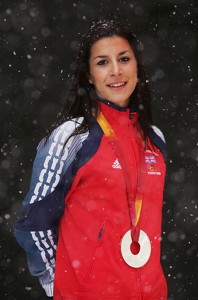
Shelley Rudman, who competes in the world skeleton-bobsleigh championship in St Moritz this week, is one of the more extraordinary phenomena of recent years. She hails from Pewsey, a tiny market town of a few thousand souls on the London-Exeter main line. Its main claim to fame is that - actually, until Shelley, there wasn't one, apart from the fact that it's not all that far from Hungerford. Or Devizes.

Because Shelley's silver medal in last year's Winter Olympics was about as improbable as Steeple Bumpstead turning up a sumo yokozuna or Blandford Forum producing a NFL-class running back. For winter sports tend to be dominated by those from regions either with exposure to low temperatures or that are, well, mountainous, as opposed to rural Wiltshire. Geographically, the nearest bobsleigh run to Pewsey is possibly St Moritz itself, a small matter of 1000-odd kilometres. Now that's what I call a commute.

This might help explain Rudman's relative and undeserved anonymity despite what by anyone's standards is an astonishing success - after all, winter sports simply aren't that British (although this doesn't quite account for the coverage given to the women's curling team of the Salt Lake City Olympics of 2002, and a few sundry ice skaters). Intriguingly, though, there is another angle. Rudman is - how to put it? - more than a little easy on the eye. She has a centrefold's face and figure to sell magazines by the shedload, and (as noted on this blog a few months back) with the post-Kournikova sexualisation of women's sport in the media, one might wonder why we haven't seen more of her. This writer would complain not at all if this were so (research purposes and all that) but must reluctantly speculate that it's possible that Rudman has simply preferred practising to pouting for the camera.

Skeleton bobbers - any bobbers - run such enormous risks of multiple injury one can only surmise that pure luck has kept Shelley looking like a shortlister for Elite Models. Head first or feet first, clattering down a half-pipe of ice at 150kmh on a tin tray must rival playing blindfold pogo-stick chicken on the M25 in rush hour for maiming potential. Possibly the greatest luger of all time, the cheerful Berchtesgadener Georg Hackl, for example, has a face and body that one might best term as just on the 'lived in' side of 'battered to buggery'.

Shelley will be up against it in St Moritz, and the smart money suggests she may not repeat her success of Turin. But anyone non-partisan who is interested in sport's romance and humanity will surely wish her well - and if she gets on a few more magazine covers, so much the better.

I can hear it now. 'You know that tasty bit that gets in here, her with the brown hair? World champion bobsleigher she is. No, straights! This mate of mine told me.' As daft as anything by The Man In The Pub. But it's true. Straight up.

Go Shelley!

SPORTIN' LIFE: More Gideon Haigh

Here he goes again. Hats off.

Game over but Aussies aren't done
Guardian, 8.1.07

As journalists deliberated over their summaries of the last day at the Sydney Cricket Ground aloft in the media centre, far below them on the outfield a telling pageant was unfolding. As the players finally left the field about 2.30pm, three fathers and their boys began a game of cricket involving two metal rubbish bins, plastic bats and a tennis ball.

The game continued, improbably, for the rest of the day, taken up by ground staff, bar staff, caterers and a few straggling supporters. Over the course of the afternoon, as the SCG resounded to cries of triumph, clangs of failure and the kerplunk of tennis ball on plastic, as many as a hundred people passed through the game, as young as six, as old as 60, and including a score of young women. Adam Gilchrist, still in his whites and baggy green, even came out to watch for a while.

As time passed, in fact, the game seemed every bit as significant as that which had gone before, lasting long after any imaginable equivalent English game, which would have dissolved for the sake of taking the piss out of one another at the pub. Australians are a much-foibled, many-follied people, but the fact that they find it hard to walk past a game of cricket without wanting to get involved is not showing any signs of changing.

Despite four barren days, almost 800,000 tickets were sold to this summer's Ashes series, and television audiences even for the dead Test in Melbourne reached two million. This was not simply because Australia were winning. Much of it derived from having lost in 2005, the fillip that provided for the game's popularity, and the brooding desire to set the world to rights.

Success, of course, tends to legitimate the forces perceived to be behind it, but Australia were shown in such consistently flattering light that there must be something instructive about the contrast of the teams. After 2005, where the rivals' cricket cultures seemed to have converged, with England the attacker and Australia their quarry, the two countries this summer reverted to more familiar archetypes.

The Australians prepared exhaustively for this series, Cricket Australia effectively providing an open chequebook and an undisclosed sum for the campaign; the England and Wales Cricket Board, in contrast, let the bowling coach Troy Cooley slip between their fingers for the sake of a few bob.

Importantly, the players led the effort. At their training camp in October 2005 at the Australian Cricket Centre of Excellence near Brisbane's Allan Border Field, it was players who spoke first, with the sports psychologist Phil Jauncey as facilitator, about how they wanted their training regime to run. Consider, by contrast, Steve Harmison. Asked in Sydney how he would approach preparation over the next four months, leading up to the first Test of the English summer, he replied that Duncan Fletcher had not told him yet.

The Australians, too, have no hang-ups where the turnover of players is concerned, as they illustrated again when the taciturn Damien Martyn stalked out silently after the Adelaide Test. The lack of sentimentality is because Australian players know they are promoted and demoted on performance, where England seem to have selected this summer on the basis of the theory du jour, whether general (eg multidimensionality) or geographical (eg the choice of James Anderson in Adelaide because he was "skiddy").

This is partly because there is so little form to judge players by; it also smacks of making cricket complicated to the point of self-mystification. If Shane Warne and Glenn McGrath shared one characteristic it was that they kept cricket simple and fun. Fletcher's attitude to Monty Panesar recalls Lord Home's description of the critics of Ted Heath: impatient gardeners, apt to gauge a tree's progress by digging it up to examine the roots.

Few events in Australia, meanwhile, restore national self-regard so reliably as beating England, or provide such opportunities for reflected glory, the basking therein. The Sydney Test was attended not only by the prime minister, John Howard, revelling in his abiding role as national tragic-in-chief, but also by the new leader of the Labor opposition, Kevin Rudd, revealing his hitherto unknown prior career as a wicketkeeper while working as a diplomat in Beijing - the inference, presumably, being that he owns a safe pair of hands. In some countries the aspiring leader must point to a career of civic accomplishment; only in Australia, perhaps, must they furnish a highest score (Rudd's was 15 not out).

Australia is much more like England than its people will sometimes admit, but it is an older England, because white settlement and spread here coincided in the mother country with the rise of organised games. Australia might be a more plural and cosmopolitan nation than of yore, but it pursues sport with an earnest avidity. Neville Cardus's lines are still apt: "The Australian temper is at bottom grim; it is as though hot sun has dried up nature."

Ironically, that sun and its nature-drying tendencies may be Australian cricket's chief enemy at the moment. English supporters who traversed the terrain praying for rain were not the only ones. Participation rates in club cricket surged up to 30% in some areas after the Ashes of 2005; draconian water restrictions, introduced in response to Australia's five-year drought, now threaten an already overburdened infrastructure. The big grounds have had to get smarter - the new MCG pipes all the run-off from its roofs into underground tanks. But many local competitions have been scaled back, and some have been abandoned, threatening clubs with extinction and damaging the continuity of junior development.

Fortunately, the sensations of this summer suggest that the love for cricket in Australia is abiding. I cannot say how long the garbage-bin game at the SCG went on because it was still in progress, after four hours, when I left. English fans have long fantasised about what Ashes contests might look like after the retirements of Warne and McGrath. The differences may not be so pronounced as they imagine. In the words of the retired baseballer Dan Quisenberry: "I've seen the future and it's much like the present, only longer."

SPORTIN' LIFE: Ladies. And. Gentlemen!

It's back. The BDO World Darts Championship is back on telly.

Yes yes I know. The best player ever (this sobriquet may still apply in the year 175,952), Phil Taylor, has been winning serially at the rival PDC championship - which this writer won't watch because of Murdochitis.

But.

This year The Power (Taylor) was beaten by Barney (Raymond van Barneveld - do try and keep up), the multiple BDO winner, in a seven-set thriller most have down as the best darts match ever played. Barney, though, having defected from the BDO last year, was not even their reigning champion, his lanky compatriot Jelle Klaassen, a swarthy, gelled and disarmingly articulate 22-year-old, having defeated him last January.

But. Yep, there's another but (and darts is nothing if not sensationalist) Klaassen's been dumped from this year's BDO championship in the first round.

If this sounds as confusing as checking out from 143, reunification is the only answer. If the BBC truly care about anything beyond the M25, they will make a serious bid for a reunified World Darts championship, pitching youngsters like Klaassen and his 18-year-old countryman Michael Van Gerwen against chunky gorblimeys like the evergreen Martin 'Wolfie' Adams and the ageless butterball Taylor.

It's kitsch. It's retro. It will never die, but its time is now. Ladies and gentlemen. Are you ready? Let's ALL play darts again.

TV REVIEW: THE LONDON NAILBOMBER

THE LONDON NAILBOMBER
BBC1
8.1.07.

In the balmy late spring of 1999 one of the most worrying episodes in postwar British social history played itself out on London's streets. A (presumably) lone-nut neo-Nazi, David Copland (now a self-styled 'political prisoner') targeted blacks, Asians and gays in a singularly vicious no-warning, no-prisoners nailbomb campaign. Was this the beginning of a suedehead apocalypse? It wasn't, although you wouldn't guess it from this quite hopelessly shabby and inadequate programme. In fact you wouldn't have guessed much full stop.

I shouldn't get angry at dramadoc. I know it's (vomit) here to stay. But by the end of this especially annoying example of the subgenre I was almost as angry at the TV as at Copland. Here was a diamond of a story just waiting to be plucked from its neglected rough and shone to perfection, in the honourable tradition of , say, Storyville and which could at a stroke have restored, inexpensively, terrestrial BBC's reputation for responsible and compelling reportage in the van of Pettifer or Pilger, or Watson's docs.

Instead we got a gallery of irrelevant style-over-substance cliches, as superfluous to the sum of human knowledge as a sixth-form girl dotting i's with heart-shapes when writing on the Council of Trent. Bully for the actors playing the main parts (including Copland, whose bedsit was festooned with swastikas but which looked suspiciously spiffy and intriguingly well-lit), but much of this was almost insulting to the memory of those who died/injured/took part in the rescue operations. A scene in the Admiral Duncan pub, Copland's last target (a direct gay hit), had a shorn-skulled queen chatting up our anti-hero, shot with one eye on This Life and one on EastEnders; everyone, actors, directors, best boys, weren't making this to reflect a fascinating moment in modern British history, merely to add to their CV. To paraphrase Julie Burchill, everything on screen now looks increasingly like an audition for something else. The final scene transcribed Copland's interview-room fessing-up; but nobody, in the words of Jack Lemmon in Some Like It Hot, talks like that. The lines, from copper and con alike, are uttered not in the flat banality of such situations but in true soap stylee, every last syllable and emphasis milked. How do you think that sounded, darling?

One of the 21st century's great unanswered questions is; how much does the flogged horse of dramadoc cost license-fee payers? Actors, rightly, don't come cheap; they certainly have costlier demands than academics or bystanders. But because the programme makers have stumped up for them we learned little as to what motivated Copland, the mechanics of British neo-Nazism and, despite the presence of Searchlight anti-fascist stalwart Gerry Gable, just how many more nearly-nailbombers there might be out there. Copland was presented as a lone nut - but was he really?

In the same way that media discourse, and by extension our everyday language is influenced by the creep of Hollywood populism - i.e. everything related to espionage has to have a Bond connection - British TV increasingly rationalises experience, even grave issues like a fanatical right-wing spacecase blowing people up in pubs, through the lowest-common-denominator lens of the media itself. For example, people having rows in pubs are actually starting to act like soap characters - ('I don't believe I'm hearing this') - have you seen them? I have. They didn't do it fifteen years ago, but they do now.

But when this tendency, possibly harmless in itself, starts to irradiate factual television, as seems to be the mission of dramadoc,then something's amiss.

Copland's worldview was dangerously and lethally fractured by exogamous fantasy, a fundamental discontinuity in seeing the world as it is. Programmes like this encourage us likewise - to view the world as seen on mainstream TV, and act accordingly. Worrying. Very worrying indeed.

Sunday, January 07, 2007

TV REVIEW:MORTGAGED TO THE YANKS

MORTGAGED TO THE YANKS
BBC4, 6.1.07

'Rather like watching a train wreck.' Thus London's former man in Washington, Sir Christopher Meyer on US-UK Iraqi policy in BBC4's Mortgaged to the Yanks, a promising history of Whitehall's post-WW2 financial hock to Washington. Quite apart from the fact that Sir Christopher did precisely, er, nothing to diminish casualties in that ongoing wreck - even resigning might have signalled some antipathetic interest in the matter - Meyer's TV debut was a calamity. Except on this occasion, you weren't a witness to the train wreck - you were in it.

American cultural critic Paul Fussell has said of diplomats - the present writer's experiences echo this - that far from being the suave, educated, string-quartet-playing, worldly people of urban myth and their own vain imaginations, ambassadors and their flunkeys are in fact the shallowest of snobs, old-school-tied into sinecures, monstrously overrewarded, mouthy and bourgeois careerists. Meyer didn't actually shout to camera, over and over again; 'I used to be the UK envoy to America, me' but there was scarcely any need. The fact he'd been given this show (and presumably lots of money) said it all.

With this ghastly missed opportunity of a show the near-insufferable Sir Christopher (as he'd doubtless wish to be known) left none of Fussell's imaginary boxes unticked. The unironic use of a vintage circa-1957 Rolls saloon as his carriage through the show; the pretentious, come-on affectation of chalk-stripe and red socks which made even Denis Healey's unmade-bed chic look stylish; 16 superfluous uses of the first personal pronoun in the opening 30 minutes. Jonathan Meades can bring off hauteur and appearing in every shot; Meyer simply cannot, because he rarely has anything particularly gripping to say, or an interesting way of saying it (think David Dickinson and David Frost on a bad day). Quite a feat when discussing an integral, and unjustly neglected part of postwar British history.

Even GCSE history students will have found it incredible that it took this programme 40 minutes to mention Bretton Woods, the 1944 blueprinting in upstate Massachussetts of the West's postwar rebuilding, perhaps the pivotal moment of postwar geopolitics - and then another five to mention the Marshall Plan, glossed in a trice. You could almost hear history teachers nationwide tearing their hair.

Because we were also treated to digressions of such fantastic fatuity that they must have been included solely to lacquer Meyer's already overshined patina of self-importance.

Consider a dissertation. You want to gauge American reaction to JM Keynes's approach to Washington on behalf of the Attlee government for a postwar loan. Who to approach? A respected historian like Fussell or Studs Terkel? A representative of, or descendent of a representative of the then-incumbent Democratic administration? Or two nutcase muckers from your tenure in Washington who you still want to suck up to?

Obvious, innit? Which must be why Meyer quizzed a brace of hawkish 21st-century Republican top brass (Richard Armitage and Karl Rove) to reflect on an entirely different America 60 years ago, somewhat akin to asking David Blunkett if he prefers Forum or Escort. Worse, it was an excuse for lots of buddy-buddy, 'hey Rich' and 'hey Karl', and the puppyishly uncritical awe with which Meyer hung on the words of these two locker-room dullards (with the oleaginous drool that only the truly professional toady can summon, Meyer described the now-discredited Rove as 'the world's master of political spin') is instructive when reading the PM's attitude towards Washington. Not only lazy and intellectually dishonest, but deeply unsavoury television, which bodes ill for documentary makers everywhere.

Even as television, this was frustratingly thin gruel, as though the embassy was cutting back on the catering at parties with not a Ferrero Rocher in sight; aside of some rarely-seen colour footage of postwar US railways and their beautiful diesel streamliners, the archive stock was pure cliché; maybe the last three people in Britain who haven't seen that Blitz footage can be sent a video. And that footage of busy stevedores and shiny car swellness Stateside; Copland's Fanfare tor the Common Man or that other ELP favourite, Hoedown from Billy The Kid ? The latter won.

Of actual, qualified historians in Mortgaged to the Yanks there was nothing (might have missed a shot of the Rolls, or the suit, or the socks, or Beltway homies). And God save us from mentioning the financial situations of France, Holland, Germany. At least the less we saw (and heard) of Meyer, the better Mortgaged became (for a bit), to remind us of how absorbing and compelling this sort of TV can be. Contributions from Tony Benn, the now extravangantly-toupéed Kenneth Clarke and Healey (still spry at 89 but with wattles like a ploughed beetfiield) offered a flavour as thoroughbred as ripe Stilton.

It didn't last. A terrible passage at the very end led Meyer to a book of remembrance in St Paul's Cathedral in which his own father, a brave missing-in-action USAF pilot, was listed. For openers, this would have been a moving and telling clincher. Instead, it was the uncomfortably-fitting tin lid on a farrago of self-advertisement memorable for its host's emotionally grandstanding conceit rather than the salient geopolitical document it could have been.

If you can't look away from a train wreck, better pretend it never happened. Let us hope British TV producers heed this advice when Sir Christopher comes up with his next proposal.

Right Git Of 2007 - The Nominations Start Here

Right Git of 2007: The Nominations Start Here

First up, apart from the present writer (I know you've filled in your forms already, you bastards) is Peter Bradshaw, the Guardian's permanently whinging film critic who always reads as though he's watched every movie with a milk bottle stuck up his sphincter, for this lulu about Miss Potter; 'when [Renée] Zellweger does her weird tight little simper, bottom lip pushed out, eyes crinkling down to slits, cheek muscles tenser than steel cables, she really does look clinically insane'. Worra charmer, eh? The playground abuse angle aside ('you know, like, that Miss Zellweger, right, she looks, like, really mad, tee hee hee) and apart from the fact that Zellweger's face is one of the most enjoyably distinctive, expressive and, frankly, attractive, in Hollywood, this nonsense takes up about a quarter of the review. I preferred one of Bradshaw's colleagues, who observed, not inaccurately, that Zellweger reminded her of Mrs Tiggywinkle.

SPORTIN' LIFE; Goodbye Mr Warne


Chuck D didn't often get it wrong, but there are causes to scorn the sage words of Public Enemy's sage and go ahead and damn well Believe the Hype. Every word of it. Working in an industry increasingly geared to producing reams of hype, the magic of Shane Warne has been, for any cricketing - or in my case - cricket-loving -journalist, live up to the sort of snake-oil schtick we as a profession churn out. We rarely believe it -music journalism, my natural home, is, if anything, even more devoted to profit-generating hagiography than sport - and then the likes of Warne (in cricket) or Sviatoslav Richter (in music) or Eric Morecambe (i n showbusiness) come along and make us actually believe it. Not once, but over and over again. For the red-top boys, Warney's been box-office gold, and for the rest of us, he sets us the challenge of avoiding a route straight to Pseud's Corner without passing Go. We are so used to being a publicity, rather than a news, industry, that when someone like Warne comes along, it's fun to actually talk about such fables and know they're true.

Thus an awful lot of wallaby shit has, and will be, written about Warne and I have no great desire to add to the sum of marsupial droppings; and the greater the performer, the feebler become the tributes the longer they last. Relativists will sneer but, notwithstanding the uncountable hours devoted by Warne to his craft, chucking a ball around and doing the Grieg sketch are both, I fear, less arduous an endeavour as playing Liszt's B minor Sonata; nonetheless Warne, Morecambe and Richter inspire the same feelings. I want to do that - but doing it that well would be spooky. Just be thankful to be alive when it happened. Reinventing leg-spin, comedic epiphany and playing technically and emotionally-immeasurable piano works at phenomenal speeds are, in the grand scheme of things, all pretty meaningless - but these are the geniuses who most effortlessly remind one why we enjoy them nonetheless - why they matter.

Thanks for the memories, Mr Warne. Beauty.

TV REVIEW: It All Began With Swap Shop

IT ALL BEGAN WITH SWAP SHOP
BBC2, 27.12.2006

What all began with Swap Shop? TV? The modern world? The universe? We never found out. But Noel Edmonds, whose brainchild this 130 minutes of surreally bad TV surely was, had no doubt. Even God began with Swap Shop.

The word was made flesh and it had therefore no room for anything else in its worldview, least of all the antiChrist Tiswas. Nor Saturday precursors like HTV's In Orbit, or Zocko. Given that Edmonds' script enabled him to say at least three times the amount anyone else did. Chegwin tried manfully to impose himself, the volume of his delivery like that of a swimmer who'd got into difficulties off Birkenhead and was signalling to a coastguard. At Copacabana Beach.

Cheggers' aggressive shoutiness begged the question; kapo or yellowcoat? You decide (I couldn't). 30 years on, Chegwin - a man who got his kecks off for national TV and for whom, therefore, the hiding of lights under bushels doesn't come naturally - still doesn't seem even to know when to stop. One class difference in Britain is between those who find Chegwin 'a lovely young man' and those who simply want to see him run over by a train. Which then backs over him just to make absolutely sure.

Maggie Philbin was emphatically not , as Edmonds bizarrely suggested, 'everybody's big sister' - I'd hazard that most adoescent boys then thought similarly impure thoughts. No, she was that rather coy and sweet girl with great legs who whose dad drove a Daimler. Her and Chegwin? It was - it was as indecent as Héloise shagging Rigsby. On this occasion, she looked, as previously suggested in various leaks, less than overjoyed to be even sharing the same hemisphere as her former husband.

In the late 80s when it seemed all you needed on British kids' TV was the name Peter, Trevor, Simon or Phillip (Peter Simon, of course, was doubly blessed) came Trevor and Simon, a double-act seemingly formed for the sole purpose of recycling Bob Block's rejected lines, then unknown in comedy circles and since rarely sighted. On the evidence of a 'new' sketch featuring Andi Peters and Emma Forbes, this absence from the top of theatrical or televisual bills is unsurprising. Witnesses may want to swap anything they own - house, children, life savings - for a bottle of brandy and a service revolver if only to forget it. The Chuckle Brothers, where art thou, we hath need of thee etc. Yeah. That bad.

In 1991 students actually went to see Trevor and Simon; but then again, Punt and Dennis did good business then too, and that, tellingly, was also the year that Viz's Student Grant character was born.

At least we were spared BA Robertson, who briefly in 1979-80 became a kind of Swap Shop laureate. A 'humorous' singer-songwriter (actually a poor cross between Lehrer and Cliff Richard) Robertson penned 'I Wanna Be A Winner' for a 'band' called 'Brown Sauce', ostensibly featuring the cast. It was tiresome; possibly the endless plugging of this tat drove the last of SS's viewers to Tiswas.

Astonishingly - and maybe inadvertantly- this bla-flum actually managed to emulate the fixed rictus of the original, with as much spontaneity as messily-divorced parents trying to please the tinies at Christmas. Not even period charm was left, merely period charmlessness. John Craven awkwardly demeaned himself all over again after all that good work on Country File; the pointless affectation Posh Paws, TV's equivalent of an aunt-knitted sweater, was in attendance; even the innuendoes were ersatz and bloodless. The question came back like a siren; How on earth did they ever get away with it?

How did they get away with it in 2006? In the end, it wasn't even worth staying with to see if Mags would actually knee Cheggers in the knackers (she didn't, I'm told).

It didn't all begin with Swap Shop. For anyone watching such a juddering calamity, it all ended -faith in human nature, the will to live, the lot.

Bad. Very, very bad. Tell-it-to-the-grandkids bad. I had gastric flu this Christmas, and It All Began With Swap Shop was infinitely less pleasant.

TV REVIEW- BEEFCAKE, BBC2, 27.12.06

BEEFCAKE
BBC2 27.12.2006

I've a journalist friend who was born in 1976 and who displays the kind of interest in 1970s filmic hardmen with a zealousness only attributable to the latterly converted. Put it this way - over his first pint he won't shut up about how hard Daniel Craig is as James Bond. Pint two means reminiscences of The Sweeney, The Professionals etc, and how hard Daniel Craig is as the new James Bond. Third pint in cues how women don't understand masculinity and how... you get the picture. He's got a mate in the army... recognise him now? He hails from the eastern side of the Pennines and doesn't look like a cross of Byron and David Essex, unlike Burnleyite Tony Livesey, the presenter of the risible Beefcake. He also may be a better journalist.

This isn't to diminish Livesey's entertaining and very good Crumpet (2005); a bracing but chaste homage to Ekland, Ege et al took on sexual stereotypes to reinforce and titillate but also challenge; none of the interviewees demeaned themselves onscreen. Unlike Beefcake where almost everyone did -amost all charlied-to-the-gills lifestyle mag editorial chums of the presenter. The only redemption of this sorry show was that convicted murderer Frankie Fraser or any of the seemingly endless procession of professional thugs employed by John Blake didn't appear.

Crumpet began with the question; 'who is so lucky as to get this commissioned, and present it? but developed into 'we need a sequel, guys'. '. Beefcake began with 'who will sack the poor sap that took this on?' and developed into 'we need a hitman, guys'.

The whole charade, a routine clip-show puffed beyond proportion by tbe Beeb was built on one of the ills of the modern age; i.e. that otherwise intelligent adults regard Get Carter as a 'classic' film. It's actually a shabbily efficient little piece of tossed-off social realism - it means as much to intelligent people in France as, say, the humour of Coluche does to us. Yet London nurtures an entire generation of men (always men) who wear their shirts out and drink rubbish beer out of bottles who swear it is 'seminal'. Funny, because a decade before, everyone said that Dirty Harry was just as seminal. And they were right, because it was, and is, infinitely better.

And so all this, I fear, does not quite make the likes of Tim Southwell adequately equipped to tell us why so much of the garbage shown on Beefcake - in between quite shockingly blatant plugs for Casino Royale, probably the 764,562nd since the movie's release - was garbage. I'd like to have seen the lad Southwell explain this status as cultural commentator to his school's Gripper Stebson when having his dinner money extorted from him (lad mag culture devotees were always victims and weakies at school). 'You can have it after I've founded Loaded, honest.'

Neither does it explain the almost Stalinist non-personing of Bruce Lee and John Saxon - among the ultimate heroes of wannabe 70s bootboys - not to mention Starsky and Hutch and Jim Rockford for their kid bros.

There was a dark tone to all this - not that the inestimable Kim Newman looks year on year ever more like Lucifer, but his Devil's advocation of The Professionals jarred. It was parodied so much, Kim, because it was so bad, so very, very bad. Because it was hideously reactionary, unoriginal shite. The scenes from Who Dares Wins still annoy when they don't outrage - as Dylan Jones says, this was 'one of the worst British films ever made'. If the Germans had won the last war, this is the cinema they would have produced (despite the fact this was fodder for those who considered themselves military minded and would no doubt have fought them on the beaches etc etc). Mindless, vicious - but, from a filmic/TV point of view, also utterly worthless.

Compare anything that Lewis Collins has ever appeared in, watched, bought a ticket for, auditioned for, heard about, to one scene from The Sweeney where a bleary Regan, in Carter's flat asks, 'ain't you got any clean glasses here?' The Professionals couldn't even ape that humdrum buddy-buddy writing, unless by the shoddiest of imitation. It's possible the Jack Regan yelled 'shut it' as loudly as he did because he knew how it would resound down the years and make successors into the pygmies they were. As one observer put it: 'on The Sweeney sometimes the bad guys got away'. Pace rare exceptions such as Spooks, the Americanisation of British popular culture has ensured that this is no longer a viable script option

Collins turned up for a special showing of Who Dares Wins at SAS HQ in Hereford (you can see it from the train, by the way, so secret is its location, just watch for the rugby posts, on the right as you head towards Newport). Oh, how they laughed. But, as Andy McNab pointed out, nobody booed. Beefcake was on the side of the gods, who are, of course, British. And while we can laugh at Patrick Mower's clothes in Target, you don't laugh at being a man or being British. Irony only goes so far, after all.

No, it's true. You can't laugh. You can only weep at such a tragedy of a show, and its target audience, the Clarksonites, the morons who sent Richard Hammond get-well cards, the 30somethings with Mitchell haircuts and England tops mindlessly chanting at Melbourne - while our cricketers got a good hiding and while my mate's mate is getting shot at in Basra. Never mind. Let's wave the flag, have a laugh.

No cause for celebration in any of that, really, chaps. And neither was there in this very, very detumuscent show.

Thursday, December 21, 2006

Fighting for the New Snobbery

The best things come to those who wait etc, and one of 2006's better essays, on Time magazine's dated, pretentious and precipitate award of 'Person of the Year' (among previous laureates, A.Hitler) to 'anyone who uses the internet, democratises information' et seq ad nauseam) is reprinted in full below. That Marcel Berlins' jeremiad should appear in the Guardian, a newspaper whose relationship with user-generated slurry, sorry, content, seems almost promiscuously intense, is signally ironic. Any cynic with a black enough heart will do worse than consult Paul Fussell's superb 1991 polemic BAD, or the Dumbing of America, to trace the roots of the monstrous fraud behind this so-called 'democratisation' of the media, written long before the web's advance. There is one nice para on CBS's Dan Rather, in which the qualities of that blameless broadcaster are stressed not in terms of his prowess as a reporter or journalist, but as a 'regular guy'. As Fussell puts it; 'who wants distinction, anyway?' Fussell also argues, via De Tocqueville, that people rarely feel as 'no-count' as in a democracy; why else phone-ins, viewer participations, tabloid bellowing, moral panics, if only to reassure Ordinary Joe that he counts, even if in reality he might not?

As a journalist I declare a selfish interest in 'ordinary' people in the media. I have studied subjects in the arts and social sciences to graduate level; I have long years of experience, gifts, the wisdom of a profession, above all the eagerness to learn more within my fields (including a way to express such things without such insufferable pretentiousness); I write about what I know; I hope it reaches people. I can do what I do rather well. Despite borderline knowledge, I have no desire or need to march into a pharmaceutical laboratory and impose my ideas, any more than I have a desire to change the course of a rugby or volleyball match. And so, I 've a downer on a dental hygienist from Porto Alegre or a web designer from Stalybridge getting into print about something (Magnus Magnusson's underwear? VD in the Andaman Isles? the size of Kerry Katona's nipples?) about which they are not remotely qualified to comment on (cf Wittgenstein). Conversely, and egg-sure, they would despise my own depositions on the colour of that mouth-swill and web design, and rightly so. If I want to know about either, I want it from someone who knows - and who will receive a fee for deposing his or her opinions, with, if necessary, a fee for whoever has sub-edited it into acceptable copy. How many England cricket fans would have contradicted Duncan Fletcher's coaching decisions in the Ashes series? Doubtless many; but it's preferable to see Fletcher fail by his own means than entertain and act on amateur ravings apparently legitimised by cybernetic publication. Ditto I'd like to see informed, preferably balanced and professional journalists paid decent wages to fill space, not gobby geeks.

I despise ordinary people until they prove themselves to be otherwise, as an individual or as part of a dialectically-driven mass. And expect to be regarded thus by any right thinking person. By the way, if this makes me a snob, then I refer detractors to Jane Fonda's line in Neil Simon's script of California Suite (1978); 'thank God there are a few of us left'.

Anyhoo. Marcel Berlins. Guardian. 20.12.06

Time magazine's "Person of the Year" awards were started in 1927, since when there have been some pretty dodgy winners, Hitler among them. They clearly should not be taken too seriously, other than as a subject of mild end-of-the-year controversy. The 2006 winner, though, has troubled me for reasons that go well beyond mere dissatisfaction with the verdict. The winner was "You" - that is, us - and to make sure we got the message, when we look at Time we see ourselves in a mirror embedded in the cover. Actually, the You is not quite all of us, merely those of us who have contributed to the growth of the internet and all it contains - for instance blogging and participating in YouTube, MySpace or other "user-generated" sites.

A spokesman for Time admitted that, had they chosen a single person who "most affected the news and our lives, and embodied what was important about the year, for better or for worse", it would have been President Ahmadinejad of Iran. But a lot of people would have been upset at that decision, so they plumped for the feel-good group, You.

Time's editor, Richard Stengel, commented: "You, not us, are transforming the information age." That was a profoundly depressing statement, as was the fuller citation explaining the reasoning: "For seizing the reins of the global media, for founding and framing the new digital democracy, for working for nothing and beating the pros at their own game ..."

The misguided and misleading use of the term democracy in this context, and the manifestly incorrect claim that You have conquered the professionals, are bad enough. But my main objection is wider. The Time award and the reasons for it promote what I believe to be one of the most pernicious and disturbing philosophies of our age, extolling the cult of what is often patronisingly referred to as the "ordinary" person. I emphasise immediately that if I use the word "ordinary", it is in quotation marks - it is not to suggest inferiority or any comparison with an elite of extraordinary people. The philosophy I object to, which the internet's information explosion has fostered, is that the "ordinary" person is as - no, even more - important to the dissemination of knowledge, information and opinion as the expert or the professional.

It manifests itself in various ways, here and elsewhere. South Korea has a news website, OhMyNews, that uses "citizen journalists" to provide most of its material. It has some 40,000 non-professional contributors; they are, of course, untested and unvetted, their submissions unchecked, their motives unknown. The reader of the website can have no idea about the accuracy of the information on it; yet it is one of the main sources of news for South Koreans. Nor can entrants into the social network sites for the young, such as MySpace, have any real idea of the genuineness, truthfulness or hidden motives of their fellow joiners; and it is impossible for the web's operators to monitor who registers. Not surprisingly, meetings engineered over the internet have caused anguish and tragedy as well as happy associations.

Then there is the proliferation of - though they don't yet call them that yet - "citizen reviewers". Hardly a newspaper here (this one included) is free from readers' opinions on the holidays they have taken, restaurants they have dined at, films they have seen and so on; it seems that no cultural or leisure activity escapes being assessed by "ordinary" people.

A few months ago the usually reliable Routier Guide to good, honest, affordable English eateries folded. People were no longer buying such guides, we were told. Instead, they searched for places to eat on various websites carrying accounts by people who had chosen to make public their dining experiences. A favourable opinion on a website by, say, a DS of Bristol (who may well be, a recent survey revealed, the chef using a pseudonym) takes precedence over a balanced review of a meal by a trained, independent inspector.

How long can it be before professional critics and reviewers - people who know what they are talking about, who perhaps have had years of experience in their field - are jettisoned in favour of "ordinary" people's views? After all, the expert costs money; the amateurs come free. Why do we need our own film/restaurant/book reviewers when hundreds of cinemagoers/diners/readers are only too anxious to tell us what they think? But Time's assertion that those working for nothing are "beating the pros at their own game" is nonsense. They are providing a different service, an opinion based not on expertise and experience, but on their less tutored feelings. I am not saying that the amateur's view is less legitimate than the professional's; but it should not be given some sort of mystical prominence.

Looking at the information revolution as a whole, the greater participation by You has been a benefit. But the movement is losing its sense of proportion. It has become too successful, too cocky. The role played by those who possess special talents, skills, knowledge, training and creativity should not be undermined by the desire to include the remainder.

SPORTIN' LIFE: It's genius, stupid

Gideon Haigh on Shane Warne. Guardian, 21.12.2006

Cardus, Arlott, now Haigh. A great sportswriter on a great sportsman. Fuck, I wish I was this good. Enjoy. Guardian, 21.12.06.

One was bouncy, beamish, a prankster, a prestidigitator; the other was tall, taut, utterly dependable, the natural straight man. Shane Warne and Glenn McGrath: it was hard to imagine one without the other. And now, it would seem, we will not have to.
Steve Waugh was great. Ricky Ponting is. But no two cricketers so separated Australia from the rest of the cricket pack in the last decade or so as Warne and McGrath: the best slow bowler of all, and the best seam bowler of his era. It is a freak of nature that they should have coincided, and ended up playing more than 100 Tests together. To call them a combination, implying planning and foresight, is not quite right. They were more, as Palmerston described his coalition with Disraeli, an "accidental and fortuitous concurrence of atoms".

When they walked off The Oval together at the end of last year's fifth Test, the sardonic smiles masked a brooding determination. Australia had lost the Ashes. That would never do. The physical expense of going on was acute, but the psychological toll of stopping would have been too great.

Their last two years have been full of personal upheaval: McGrath took time off to be with his wife; Warne, rather more publicly, took time off from his wife. But target 2006-7 became their objective, and is now to be their swansong.

Warne seems to have been around forever, and not long at all, so vivid is the memory of him in England in 1993 as a 23-year-old blond blur with turn to burn. But the man who bowled the ball of the last century has kept serving up candidates for the ball of this, even if they haven't been as rippingly obvious. For all the talk about his flipper and his zooter, his woofer and his tweeter, it was his subtly but scientifically varied leg-break that remained the eternal mystery ball. As Graham Thorpe observed last year in comparing the Australian with his statistical shadow Muttiah Muralitharan: "Warne was always varying the degree he spun the ball, while Murali generally just tried to spin the ball as much as he could."

In his private life, of course, Warne has always been the soul of indiscretion. Even now, Warne marches to a different drum in this Australian XI, listening for his personal bongo while others keep in step with the martial snare. That, though, has involved one of his most amazing feats, persuading Australians to cut him the slack he always thought was his due. He is like the eternally mischievous kid brother: incorrigible to a degree that has become endearing.

The 1993 Ashes series where Warne made his name was watched at the Australian Institute of Sport Cricket Academy by McGrath, also 23, who got by on four hours' sleep a night so he could follow the feats of Allan Border's all-conquering team. Little did McGrath know, but he was watching the opening of the vacancy that he would fill. Craig McDermott was injured; Merv Hughes was injuring himself; McGrath played in the first home Test of the southern summer as a kind of research and development project. His breakthrough tour was 18 months later in the West Indies, when he met the challenge of Curtly Ambrose and Courtney Walsh with his own brand of homespun hostility.

McGrath's bowling career began on a dirt track on a poultry farm with an upturned water trough for a wicket. It retained that unadorned, unrefined, self-sufficient practicality. "Keep everything simple" was his golden rule. "Don't complicate things for the sake of it." He brought to fast bowling the philosophy of the Model T, mass producing deliveries just short of a length, just wide of off stump, just doing enough, just about unimprovably.

Warne and McGrath both epitomised Australian excellence and embodied Australian aggression. Warne was a tease, a flirt, a provocateur, tripping up even the nimble feet of Mark Ramprakash. "Come on, Ramps, you know you want to," he taunted the young batsman in a famous spell at Trent Bridge in July 2001. "That's the way, Ramps, keep coming down the wicket." So Ramps did - too far, and another English Ashes challenge stumbled and staggered to a halt.

McGrath, meanwhile, was the trash talker extraordinaire. In his autobiography, The Wicked-Keeper, a few years ago, New Zealand's Adam Parore took the trouble to transcribe a standard McGrath monologue: "You guys are shit. We can't wait to get rid of you so we don't have to play you. Get the South Africans over here so we can have a real game of cricket. We can't be bothered playing you guys. You're second raters." Rubbish, of course - but annoying rubbish, the kind that one recalls and ruminates on, as did Parore.

Above all, they have been winners, each a talisman for the other. McGrath has been on the winning side in 82 out of his 122 Tests (67.2%), Warne in 90 of his 143 (62.9%). No bowlers with more than 200 Test wickets have played in a greater proportion of victories. It's a safe bet that no bowlers can have contributed so much to victories so often.

The farewells of Warne and McGrath will elicit tributes aplenty. What they mean for Ponting's Australians is less clear. Cricket in this country has nursed a dread of a sudden glut of retirements since the Sydney Test of January 1984, which first Greg Chappell, then Dennis Lillee and finally Rod Marsh chose as the stage for their final curtain call. They left in charge Kim Hughes, who proved unequal to the burden, and Border, who took a while to feel comfortable with it, and the Australia XI for three years marked time when it wasn't retreating.

McGrath now has a near body double in Stuart Clark, who has been probably the most consistent component of Australia's attack this summer. But while Warne has an effective understudy in Stuart MacGill, the wrist spin ranks thin drastically thereafter. Warne made leg-spin look easy - much easier than it was, in fact, as numberless imitators have discovered. No new Warne looms, any more than does a new Bradman.

That is something, however, Australian cricket will have to deal with on its own. McGrath's wife is sick. Warne's is sick of him. Age is only one factor in their decisions. As important as their pasts are their personal futures. These are not simply retirements about where Warne and McGrath have been; they concern where the pair want to end up.

SPORTIN' LIFE: Goodbye James

Goalaccioooooo!!!!!! Paul Stump says a qualified addio to Football Italia

Any day now, like an unwanted guest at a Christmas party, Football Italia will sidle anonymously away into the Christmas ether even before the DJ's got going, clutching a bottle of cheap spirits, shyly and shamefacedly, never to be seen again. Bravo's axing of a show that, in its mid-90s heyday attracted nearly four million viewers to Channel 4 on Sunday afternoons (Four million. I'll repeat that for the benefit of Russell Brand) is a cause for regret. Football Italia was - lest we forget - the first as-scheduled terrestrial broadcast shown in Britain after the death of Diana, at 2pm on The Day After (Inter won against I forget whom, and shiny-barneted Uruguayan Alberto Recoba scored a left-foot, long-range screamer).

We know why Football Italia was good; we know why it had its time in the peninsular sun; we know (sort of) why it failed. James Richardson was a hitherto unseen type of presenter; Chrysalis's Neil Duncanson a fantastic producer; the theme tune was a funky firecracker; Serie A was, until c.1998, the best league in the world. Football Italia was, like the opening of the Chunnel and the sensationally successful 1994 visit of Le Tour to Britain emblematic of a progressive new Europeanism.

It couldn't last, and didn't. The stars left; standards fell; bungs and bribes crowded in; and despite Football Italia's young AB1-2 audience's pretence to cool internationalism (founded on not much more than Easyjet dirty weekends where speaking the lingo was not mucho necessario) hidebound, swing-low-sweet-chariot, anglocentric insularity did the rest.

Shameful, all of it. Richardson, an intelligent and discerning man, was the first British sportscaster to ally the argot and discourse of fanzine and music paper fandom with football coverage - tellingly his heyday was also that of Fantasy Football League. It was possible for Richardson to insert puns on the oeuvre of Elvis Costello into an otherwise urbane discussion of Italian football issues. He didn't shout; didn't overdo; he knew his limits. Obviously a professional journalist, not an ex-pro, Richardson sussed and sampled Michael Robinson's Spanish schtick in the phenomenon of El Despues del dia. JR never slew the chimera of the panellists' old pals' matiness à la Football Focus - and was somewhat let down by a less than glittering array of pundit sidekicks, despite Butch Wilkins' engagingly epiphanic wonder which made almost everything 'quite remarkable' - but at least tilted at its creaking windmill. In 1995, all male media studies students wanted to be James Richardson.

Sadly Football Italia's legacy has been to scarcely touch the tabloid mainstream of football media, and those eager students are now in jobs at broadsheets. Unfortunately they seem to be stuck in their Union Bar mode - shirt out, necking Moretti and Grolsch, discussing Super Furries albums or Bill Hicks bootlegs. One need only glance at the clodhoppingly bad attempts at 'irreverence' that form things like The Guardian's 'Clogger' column and the acres of mediocrity that passed for 'humour' during the last World Cup, which allowed redbrick standards to run riot. Richardson, Baddiel and Skinner did po-mo references to obscure 80s bands a decade back, and what's more, they did it with a bit of style and had novelty on their side. For well-turned laffs by people who quite clearly know what they are doing, read The Guardian's Jeremy Alexander or the Torygraph's Martin Johnson; the former's excellent TV sport critic Martin Kelner at least has professional experience of comedy at the sharp end beyond an expensive bar in north London, at least enough to spot a bad line at a hundred paces.

But isn't this all much of a curmudgeonly muchness? So low has the Grauniad's sport bar been lowered on the altar of user-generated content that they actually considered making a fight of their staggeringly awful 'over by over' cricket commentaries in the face of the ICC's excellent decision to sanction this tatty phenomenon in which talented sportswriters like Sean Ingle are forced to pander to the moronic bloggery of the underinformed and underoccupied, the 2:2 media studies failures for whom the laptop is the equivalent of a day-long residency as the Barmy Army's trumpeter - and yes, more references to obscure pop culture, bad gags, and approximately zero added to the sum of human knowledge about sport. Gaz from Skelmersdale (hi, Gaz!) thinks Glenn McGrath looks like a member of Ned's Atomic Dustbin. And a representative of a national newspaper (presumably also an NUJ member) indulges this drivel? Richardson, worryingly, now works as a podcaster for the Guardian, a de facto member of an outfit that endorses material of a trivial shoddiness that would never have passed muster in the Chrysalis salad days of 1993-4 when the only excuse for including nonsense was if it issued from the mouth of comically-hatted Don Howe.

To blame JR and his friends (and whither the underrated mic maestro Peter Brackley now?) for this dumbing-down that dares not speak its name is akin to blaming Lord Reith for Ant and Dec, and so let's not. Shooting the messenger is never a rational option. And, let's be fair, Richardson the messenger is simply a national broadcasting treasure - his unsung and largely unseen contribution to Eurosport's cycling coverage this summer was expectably exemplary. Imitation may be regarded as the sincerest form of flattery, but Football Italia and Richardson have, as yet to spawn even remotely worthy mimics. But that is no reason not to mourn this weekend; and no cause for a shameful exit.

TRAVEL: Wine on the line and the Rhine

Trains can be an ideal and cheap way to sample Germany's wines at harvest time, writes Paul Stump

German stereotypes? Rubbish. They're not always efficient. They do have a sense of humour. And you can mention the war. But one stereotype that's spot-on is that their railways are absolutely brilliant. Example? The Schönes-Wochenende Ticket. From midnight on Friday to 3.00 on Monday morning you can go anywhere in Germany on local trains for just 30 euros. The possibilities are pretty staggering, but the autumn offers a particularly rewarding way to milk this giveaway.

It's wine harvest time and Germany's principal wine regions - the Rhine, the Mosel and the Nähe - are all served well by rail. The city of Koblenz, where the Rhine and Mosel meet, should be your base, and after that all you'll need is a decent corkscrew.

THE MOSEL. A river of notable sinuosity, almost every inch of its steep sides are blanketed with vines from Koblenz upriver to the ancient Roman citadel of Trier. And while the Rhine's castles may enjoy the greater fame, one wouldn't want to be charged with capturing the Teutonic bulk of the fortresses at Cochem and Eltz.

Riesling's the thing here - on some of Europe's steepest vineyards (55% gradient in some places), more than half of the Mosel's production is given over to this grape. The steepness maximises the vines' exposure to the sun and this, along with the slatey soil, lends Mosel wine its character. The result is some of the world's classiest dry whites. Traben-Trarbach, at the end of a delightful little branch line from Bullay, is an excellent place to sample them. Martin Müllen (2 Altemarktstrasse) is a smart and serious wine-grower drawing plaudits from all over Europe for his toothsome Rieslings. But not as much as the famous Weingut Heymann-Löwenstein at Willingen, near Koblenz. Their beautifully balanced sweeties strain the pocket a tad, but even at 20 euros a bottle it's worth the outlay (10 Bahnhofstrasse).

THE RHINE. The Mittelrhein, south of Koblenz, is the landscape of Wagner's music-dramas. You half expect the locals to be kitted out with spears and winged helmets. Castles by the score - desolate ruins or neo-Romantic follies crowning promontories and pinnacles, including the diminitibe Burg Pfalz, stranded on its midriver sandbank like a toy yacht - forbidding watchtowers, towns of arthritically bent houses and crooked alleys. Anything in Bacharach, for example, would be swiftly half-timbered if it stayed still long enough. It's only now - after the cliffs and crags north of the Loreley Rock - that the slopes become suitable for vines in any great number.

Toni Jost's products stand out in Bacharach; the family are devotees of getting Riesling and Spätburgunder just right at the right price (circa 8 euros). Their wines are flinty and flirty, with only the slightest nod to the ubiquituous Chardonnay tang of the Chablis greats (14 Oberstrasse). The 2002 vintages are particularly winning. The Josts' eldest daughter Katharina is the reigning Wine Queen of the Mittelrhein; these popular contests, I am assured, are not beauty pageants. The winners are elected for their knowledge of local culture and winemaking. Nonetheless, all the winners seem to be, well, exceptionally easy on the eye.

A maverick in these parts was the late Georg Breuer of understatedly beautiful Rüdesheim on the east bank of the Rhine (take the ferry from Bingen, or simply take a train from Koblenz). Until his death in 2004, Breuer opted out of the meticulous but formidably bureaucratic classification system of German wine (Tafelwein, Qualitätswein mit Prädikat etc)to concentrate on perfecting his own idiosyncratic Rieslings and Grauburgunders of great craftsmanship and delicacy- certainly even after his demise, plaudits for the Bruer vineyard haven't dried up (8 Kirchgasse).

Bingen is a pleasant enough town notable for its stately but sinister Mausetürm where, according to a gruesome medieval legend, the villainous Archbishop Hatto of Mainz was nibbled to death by a horde of hunger-crazed after he had burned the local peasantry alive during a famine. Bingen is also where one should change for the Nähe wine region, specifically Laubenheim, near Bad Kreuznach, where Sclossgut Diel (16 Burg Layen) is picking up good ratings. There are a,lso trains south down the Rhine to Speyer, through more vine-lined terraces.

TIPS. The Schönes Wochenende Ticket cannot be used on trains classed as D, IC, EC or ICE. Consult the yellow departure tables before boarding. Station staff are almost always helpful, and printable itineraries can be found and printed off from German Railways' astounding website, www.bahn.de. Always phone ahead when contacting winemakers, especially during the autumn harvest. Most welcome visitors, but not all. Wine festivals are plentiful at this time, however, details of which can be found by surfing to www.weinfest.com.

Wine-tastings are uncountable; the local tourist office will unfailingly direct you to those that best suit your palate and pocket. These affairs are normally the nearest most folk come to tasting the manna of Eiswein and Trockenbeerenauslese vintages, Germany's rare dessert vintages and their answer to Sauternes. Don't bother cutting cost corners in supermarkets; most weingüte (which sell their own and/or others' local wines) are fairly priuced, the staff clued-up and the settings sometimes idyllic. I enjoyed a full ;unchtime bottle or rather acceptable 2002 medium dry Riesling from a decent local producer in a Bacharach courtyard with an autumnal sun decanting through vines - for just 8 euros. Takeaway prices are even lower.

WHERE TO EAT. Hotel Hohenstaufen (41 Emil Schullerstrasse) in Koblenz is a good touring base, but budget accommodation is not hard to find, thanks to the wonderful German phenomenon of fremdenzimmer, B&B rooms in private houses. In wine towns, these may well be located within the property of a winemaker or dealer.

One snag; owners may not always speak English but will, at the very least, provide a breakfast large enough to intimidate even Mr Creosote. Railway buffs alert - views from the basic bu very comfortable Haus Trude/Hotel Rheinterrasse in the tiny but lovely village of Rhens, south of Koblenz, give directly onto the Koblenz-Mainz main line, one of the great rail arteries of Europe (16 Koblenzerstrasse) - and all for 40 euros. Unlikeminded partners will at least be compensated by majestic views onto the Rhine in full spate just beyond.

An edited version of this article appeared in The Bulletin, 6.10.2005

MUSIC: Pen and Piano, interview with Helene Grimaud


Down boy. Paul Stump tries to keep his cool while alone with the stupendous Hélène Grimaud as she talks about pianism and penmanship

"It's a shame," sighs Hélène Grimaud, staring out of her hotel window near Brussels Airport. "It was so nice when I left London this morning." Outside the sky is the colour of wet cement.

The pianist isn't staying long - just an afternoon of interviews promoting her new CD of Brahms and Schumann - also cellist Truls Mork, mezzo Anne Sofie von Otter and conductor Esa-Pekka Salonen - and her second book, Lecons particulières. Then it's on to Berlin for a week of rehearsals.

Grimaud is sleek, poised, with a piercing grey-eyed gaze and, for her slightness of frame, an incongruously powerful handshake. She's also formidably and ostentatiously clever, something she says got her into trouble as a child. "I was considered a disruptive influence at school," she giggles. "I was always asking too many questions." This was in Aix-en-Provence in the early 1970s. "My parents tried to find a channel for this hyperactivity. Tennis, dancing..."

Hmm. The next Francoise Durr or Sylvie Guillem? No.

"...and finally they got me interested in music. That was when I knew I'd found what i needed. I just had the idea - perhaps subconsciously - that no matter how much I learned about music, I would never stop exploring it."

Her talent led her to the Paris Conservatoire at 13 and she made her first recording at 16. Eventually the Parisian milieu tired her and she moved to Flordia in 1991. She's now based in upstate New York and continues to be one of the world's most in-demand instrumentalists. Her range might seem comparatively restricted - principally core Germanic repergtoire, plus Chopin and Rachmaninov - but that's the way she likes it. "My repertoire changes slowly because it takes me a long time to absorb all the information about a work - its phrasing possibilities, for example - before I feel ready to play it in public."

Recently she's strayed into contemporary music, notably by the Estonian Arvo Pärt and American John Corigliano. "But only because I felt that I'd reached a point in my life where I was ready to air those works before an audience. I dabble a lot in all kinds of music at home, but unless there's something that makes me feel I am ready to do full justice to a work in a hall then I won't do it."

Rachmaninov's discursive and restless Sonata No.2 is on her programme at Bozar this month [gig postponed till March 2006 as it turned out - blogger's note]. She broke through with the original version of the work in 1985 but is now returning to it in its revised 1931 guise. "You have to learn what Rachmaninov changed - the revision is lighter, more personal - and I have spent time trying to figure out how rhe pianist should approach those changes mentally and technically." This fastidious approach is reminiscent of players like Serkin and, more recently, Brendel and Zimerman's endless reworkings of their own favourite pieces. Is it true for her that, in Paul Valéry's words, a true work of art is never finished?

"Absolutely," she laughs, " even my books... they take a long tie because I am never satisfied with them. I'm always editing." Her first, Variations sauvages (2002) appears in English in autumn 2006. It's a loosely autobiographical tale about Grimaud's own discovery of and efforts to assist in the conservation and protection of American wolves (she has a family of them on her Westchester farm). The new volume, Lecons particulières is a more abstruse and ruminative piece, part-novel, part-memoir. It's about an internationally-famous pianist named Hélène who is on a journey of spirital and artistic self-discovery. One German critic summarised it as "a cross between Jack Kerouac's On The Road and Hermann Hesse".

"Oh, that's very flattering," she says. "I read a lot of German literature when I was a child, and I suppose there's got to be an influence there." The motifs of the voyage to enlightenment in nature, religion and art are also clearly discernible in her approach to music. "That's true," she sadmits. "I needed to refocus on music, and writing this book - perhaps paradoxically - helped." She didn't even need to take a break in her career to do so. "It wasn't a problem. Things were going too fast anyway - I was starting to lose sight of ehat I wanted to play music for. Writing my thoughts down seemed to calm things and finally, when I finished, I was able to approach my career with a fresh mental outlook."

Which must help when one is in London for breakfast, Brussels for lunch and Berlin for tea.

This article appeared in edited form in The Bulletin, 1.12.2005

MUSIC- Playing With Fire, Roby Lakatos interview


Violinist Roby Lakatos has made Belgium his home, but as Paul Stump finds out, he's a world citizen

The bustling ambiance of the bar at the Hotel Metropole is all wrong for the surprisingly soft-spoken gypsy violinist Roby Lakatos. Given his promiscuous virtuosity onstage, his reticence is almost incongruous.

Lakatos is packaged as a kind of dandified teddy-bear, in clothes that might charitably be described as 'rococo', a sumptuously coiffed head seemingly too big for his body and a moustache waxed to within an inch of its life. But I still have to encorage him to raise his voice.

"You know what?" he says with a twinkle in his brown eyes, "I did that whole image bit for a laugh. My manager and record company said, 'that's it!' and I've used the whole thing ever since!"

Not that he needs an image to impress. He's the seventh generation in a family of violinists traceable to virtuoso Laszlo Bihari, whose playing bewitched the court of Habsburg Emperor Franz-Josef. Bihari's mesmerising marriage of gypsy fiddle voicings and traditional Hungarian dances - most notably the csardas, a two-step variant of older Carpathian and Transylvanian dances - inspired Liszt and Brahms.

At first a classical violin student, Lakatos was a prize-winner at Budapest's Bela Bartok Conservatory in 1984 before trying his luck in the west. "It was easier getting to and from Hungary than any other Eastern Bloc country back then," he remembers. "I was with a gypsy band in Liège, liked the place, so I was able to stay and still visit Budapest. Now I think of myself as Belgian."

It's when Lakatos talks music that he truly comes alive. "I try to mix as many influences as I can. Jazz, folk, classical. Being nomadic, gypsy music and culture have always had to adapt to the local culture. Look at flamenco guitarists or Mariachi bands. These days, gypsy music all over the world is different. There can be differences beteween regiuons and even districts within a certain country."

So, he thought, why be constrained by one tradition? "Our violin tradition hadn't moved on fast enough. It was too heavily associated with kitsch, with hack musicians serenading diners over a plate of goulash." It's an enduring stereotype - the gypsy violinist as maudlin eulogiser of onion domes and ox-carts, the tears of exiles who've had too much paprika and Bull's Blood. This, though, isn't Lakatos's bag at all.

But by its very definition, gypsy music is always moving, evolving, transforming itself, I offer. "That's right. At first my family weren't happy with what I did, but then they accepted it. Hungarian gypsy music is full of influences. The Turks ruled Hungary for 500 years, so there's an Eastern influence, too. And look at the gypsy traditions in jazz. I played on one of Stéphane Grappelli's last dates, you know," he adds, with deserved pride.

At the Cirque Royal, Lakatos reveals another aspect of his musical buttwerfly mind - klezmer, another music of nomadic tonalities and rhythms, and featuring his manager, the Belgian singer Myriam Fuchs. "That'll be the next CD," declares Lakatos. "We're taking the music on the road before Christmas, and then recording."

Lakatos has known most of his sidemen for a good part of his adult life. "It's unusual for musicians to stick together like that," he says, "and even rarer for them to have such a good rapport on the bandstand."

Symphony orchestras and chamber dates have also comes Lakatos' way. Russian pianist Polina Leschenko has recorded a Prokofiev sonata with him on a session that included the great Argentinian pianist Martha Argerich. "I hadn't played classical music formally since I left Hungary two decades ago," confesses Lakatos. "But when a beautiful girl asks you to do something like that, you do it!" Another twinkle - of roguish gallantry this time.

But it's improvisation that clearly thrills Lakatos the most. "It's all about imagination. I went to see the latest Harry Potter movie when I was in Hollywood last week. Brilliant stuff! That's the sort of imagination a true improviser needs, no matter what kind of art. I love it when I improvise and the audience responds. The audience and me, ideally, we work off each other. The better they respond, the better I respond."

This article appeared in edited form in The Bulletin, 8.12.2005

Wednesday, December 20, 2006

TRAVEL: Kandersteg


BYRONIC BYWAY

Paul Stump is dizzied by Kandersteg's sights and heights

The smart blue and white Lotschberg train begins to climb. The line rises 800m in a little over 20km, doubling back on itself twice. It heaves its way through tunnels of unlined rock, along giddying ledges, before the floor of the Kander valley rises abruptly and we're pulling into Kandersteg.

As a kid I read the railway writer Cecil J Allen's enthralling accounts of travel in Switzerland. The Lotschberg main line between Bern and Milan was a favourite, and the above is a paraphrase of one of CJ's accounts.

The Romantics made this part of the Bernese Oberland into the tourist destination it is today and Kanderstef has few rivals in showing why. The scenery would exhaust the most thorough of thesauri. The trinity of the Balmhorn (3701m), Altels (3699m) and the wondrous snow-sugared Blumlisalp (3663m) dominate, but other peaks, crags and precipices of breathtaking scale surround the village.

For those eminently sensible souls who find the acquisition, donning and wearing of skis and their various attendant accoutrements a bit of a pain in the old behind, Kandersteg is nearly perfect. You CAN ski here, but as long as you do it at a discreet distance from the village. Mostly the place is devoted to langlauf and walking, and as such is spared the blight of yoof that disfigures so many Alpine resorts. You won't find a Mulligan's bar in Kandersteg. Posters advertising 'Der Snowboard-Party' are rare. The word 'DJ' is almost unknown.

Sounds stuffy? Wrong. Kandersteg still has working dairy farms and a sawmill. Not everyone earns their money waiting on townies in ghastly psychedelic artifical fibres. Sounds expensive? Wrong again, chum. Kandersteg, by the standards of the Oberland, is reasonably priced.

The 50km of Wanderwege, or hiking paths, are mapped and signposted with meticulopus attention to detail (this IS Switzerland, after all). Kandersteg tends to get a lot of snow, and as such the network is somewhat attenuated in winter. For instance, the long-distance footpaths over the high passes into the Valais region to the south are closed as is, alas, the path along the Lotschberg-Nordrampe path created by the BLS/SBB, tracing the spectacular line on its ascent to the summit. This thing of wonder, usually placed within a few metres of the metals, is one of the wonders of the trainspotter's world; this is not opinion, it is verifiable fact.

But wonders are attainable even in winter. The Oeschinensee is a 400 metre climb to the east of the village; lying below the tumbing cliffs of the bewitching Blumlisalip, one almost wills water-sprites and other Germanic folk figurtes to attend its shores. There's a helter-skelter toboggan run down from here to the cillage for those with strong stomachs and/or a pathological death-wish.

Byron wrote Manfred in these parts and the soaring eagles, sheer rock faces and raging torrents in the impressive defiles around Kandersteg lead one to believe that the poet at least passed through. A walk south from the village brings one to a 1000-metre wall of rock; the railway line plunges into the legendary 14-km Lotschberg Tunnel, and the only way up and over is via a tiny road hewn into the cliffs, unlit tunnels and all, bringing the hiker into the gorge of the upper Kander. Looking up cricks your neck, looking down turns your stomach. But this is the only access to the Gasterntal, a place of almost supernatural beauty and silence. There is not a sound anywhere; even footfalls sound indecent. If the hereafter has a sound, this may be it. Even Byron couldn't describe it adequately, so I am not gonna try.

Accommodation in Kandersteg is plentiful. The Hotel Zur Post (0041/33.675.12.58) is central, and with shower-equipped double rooms with B&B from 80 euros, offers a coy and cheerful hearth. Visit www.kandersteg.ch for other options.

Food is... well, Swiss. Served in abundant portions and still the same unsophisticated, calorific, hearty fare of cheese and fatty meats required to sustain mountain folk, it's an acquired taste, and the station buffet is as good a place as any.

The BLS Lotschberg line is, of course, one of the jewels in the glittering crown of Swiss railway achievement, not to mention one of the most stupendous civil engineering feats in Europe. The tunnel, completed in 1912, is an epic in itself. In 1906, excavators hit water-bearing rock under the Gasterntal and the infant Kander; 25 men and much machinery were swept away. The detritus was walled up in the mountain and the tunnel took a bizarre detour to reach Goppenstein in the Valais, from whence the line descends to Brig and then on through the even longer Simplon Tunnel to reach Italy. Car-carrying shuttles run through the Tunnel, and in summer take motorists all the way from Kandersteg to Iselle on the southern side of the Simplon.

The superhuman efforts of the Lotschberg engineers in this amazing place are perhaps the most eloquent tribute to the mammoth assetion of nature in this mountain byway. Their achievement beggars imagination - but not as much as when one looks up to those ethereal fastnesses above 3600m. Kandersteg is a place that offers humblebness - and through it, fulfilment.

Thursday, December 07, 2006

Obscure True Fact No.94

There is no Welsh language word for 'orgasm'. And that's true, that is.

SPORTIN' LIFE: Gideon Haigh - Read Him Now

http://blogs.cricinfo.com/eyeontheashes

He's the best cricket writer in the world. Maybe the best sportswriter full stop.

SPORTIN' LIFE: Martin Johnson on Adelaide

Daily Telegraph, 6.12.06

All sorts of theories have been advanced for the increase in global warming over the past couple of decades, but the boffins agree that it's largely man-made. However, while most have blamed aerosol cans and rain forest destruction, the most obvious suspect is the heat generated from Shane Warne's spinning finger.
Warne sent down the thick end of 90 overs in this match, and in the unlikely event that the Australians celebrated one of the most outlandish victories in Ashes history with nothing stronger than a pot of tea, they could have used Warne's business digit to boil the kettle. It was all the more remarkable for the fact that the same man who sent down an assortment of meat pies in the first innings, turned up for the second with a sackful of hand grenades.
There are two ways to play Warne, and somewhere between their two innings England decided to abandon the Fred Astaire routine which had served them so well for the first two days and switch to the kind of footwork that would have embarrassed a boxful of battery hens.
There's a new Monopoly game here in Australia, based on a cricketing theme, and they might now consider launching something similar for the English market. "Ashes 2005 – Advance (in open-topped bus) To Trafalgar Square". "Ashes 2006 – Do Not Pass Go. Do Not Collect £200. Go Straight To The Tower of London".
This was supposed to be a pitch so bland that, with Australia in the grip of a nationwide drought, you suspected the groundsman had done away with the watering can and prepared it with embalming fluid. However, the events of the final day in Adelaide were so morale-shredding that the only way you could now describe England as heading in the right direction is that they took off today on a flight to Perth. After this debacle they might as well keep right on going – past Singapore, over Asia, and not stop until they get to Heathrow.
There was every reason to believe from the way England batted in the first innings that the great man was about to finish his career as Shane Worn. It's a miracle he's still going at all at the age of 37, with a lifestyle that rarely sees him stray far from a packet of fags or a takeaway pizza, but not even Warne could have expected England to be so supine yesterday.
There are many ways of asking for trouble, but one of the better ones when Warne is spinning it yards is to just stand there and tug the forelock to him. It also resulted in one or two umpiring decisions going against England. When Jim Laker was taking 19 wickets in an Ashes Test in 1956, his appealing took the form of a series of polite inquiries, but modern cricket is not like that and Warne and Co were allowed to batter the officials into submission with more appeals in an over than Bob Geldof has launched in a lifetime.

Warne also managed to put one over on his nemesis, Kevin Pietersen, defying the laws of geometry to bowl him, from over the wicket, behind his legs, and hitting not leg stump, but off stump. It was almost as gobsmacking as the first ball he ever sent down in Ashes cricket, to Mike Gatting. No one has ever made a cricket ball behave like Warne does, not even Wilson of The Wizard.
It is hard to believe that an Englishman can ever have batted for 11 hours and 54 minutes in a Test match, as Paul Collingwood did here, and finished on the losing side, but Warne's performance effectively turned Australia's second innings into a limited overs run chase. And we all know how good England are at one-day cricket.
We wondered, for a moment, when Australia lost a couple of early wickets, whether England's think-tank had devised a plan of Baldrick-like cunning in its conception. Namely, that their best chance of winning was to bat like wallies, and lure the Australian batsmen into on orgy of adrenalin-charged destruction.
However, it would be hard enough to give credence to this scheme even if they had had a Warne of their own, never mind Ashley Giles. Worthy cricketer though Giles is, if England have brought Monty Panesar out to Australia in order to further his education, then Monty is coming on a treat in terms of future employment. Either as a porter, or a drinks waiter.
There was just one moment when Australia threatened to blink, when a bogged-down Michael Clarke had played out five consecutive dot balls against Andrew Flintoff. At this point Pietersen came up to yell some encouragement into his captain's ear, and when Clarke took three runs off the next ball, Pietersen was still so hyped up that he turned it into a seven with a ridiculous shy at the stumps.
England's last engagement of the day was a Robbie Williams concert in Adelaide, though an evening with the Barmy Army trumpeter perhaps ought to have been substituted by way of punishment. As it is, they leave Australia's City of Churches with barely a prayer in their mission to retain the Ashes.
The next few weeks threaten to be unbearable. As England's innings was in its death throes, Warne stood in the slips and shouted, somewhat curiously, to Glenn McGrath: "Come on, bowl him a ham and pineapple!"
Maybe it was some kind of code involving Warne's favourite topping, but one thing's for sure: England are now in for a long stretch of listening to cocksure Aussies taking the pizza.

SPORTIN LIFE: Olympic Realities - Andrew Rawnsley, 26.11

Andrew Rawnsley
Sunday November 26, 2006
The Observer


In the time that it takes you to read to the end of this sentence, the cost of the London Olympics will have risen by another billion pounds. Worse, I have no idea whether that is an exaggeration or an underestimate of the soaring bill for staging the Games. After the grisly experience of the Millennium Dome, you might have thought that this government would have been once burnt, twice shy of the construction and mass entertainment business. After the money-guzzling, credibility-munching monster that was the dome, Tony Blair half-apologised for that fiasco and sighed that there would be 'lessons to be learnt' about the running of large infrastructure projects. Well, if remedial classes in event management and construction ever happened, no one involved with the Olympics seems to have attended them. The disaster that was the dome is now being replicated on an even more gargantuan scale on the other side of the Thames.

Just as with the dome, Tony Blair was initially sceptical about the Olympics, only to allow himself to be seduced by the thought that the Games would be a glamour project to put Britain at the centre of world attention. Just as with the dome, Gordon Brown bit his nails about the costs, but didn't publicly voice his doubts for fear of being cast as a killjoy. Just as with the dome, the Tories and most of the media were all for the Olympics until the project started to go off the rails.

Just as with the dome, those who were sceptical about the costs and doubtful about the purpose were dismissed as whingeing spoilsports. When the government was debating whether to back the bid, Bill Bush, an adviser to Tessa Jowell, did some confidential research into the Sydney Olympics of 2000. He found that the Olympics generated a fortnight of euphoric public and media opinion when the bid was won and another fortnight of feel-good when they were on. In between, there was six years of ferociously hostile media and public opinion. Politically, that made the Olympics a sport the government was always bound to lose at.

Just as with the dome, Mr Blair shrugged opposition aside once he got seized by the notion of adding a grand projet to his legacy. When cabinet colleagues and Downing Street aides expressed their doubts about going for the Games, the Prime Minister told them: 'Don't be such wusses.'

Just as with the dome, responsibility for this project is divided. Tessa Jowell, Ken Livingstone, Seb Coe - the minister, the mayor, the Tory peer and a large cast of political and sporting panjandrums - all have a finger in this project. When everyone is in charge, no one is in charge. The chief engineer, Jack Lemley, has fled back to America for fear that his reputation would be wrecked by continuing association with the project. He quit complaining about political meddling and warning that the costs would escalate 'exponentially'.

Well, of course. It was both predictable and predicted that the Olympics would be a black hole sucking money out of taxpayers and lottery funds and away from good causes. Try justifying these Games to disabled groups whose lottery funding is being cut. Cost overruns are as integral to the tradition of the modern Olympiad as are cheating and corruption. The Games are a serial financial killer. The taxpayers of Montreal are still paying for the 1976 Olympics 30 years after they were staged in the city. The cost of the last Olympics in Athens went so out of control that the Greeks had to go begging for a bail-out from the European Commission. The Olympic legacy to Sydney was another huge budget-buster and a splendid stadium which sat empty and unused afterwards. Beijing is believed to be flushing away going on for £20bn to host the 2008 Games.

I have to say that even a hard-core Olympic sceptic like myself has been staggered by just how rapidly and wildly the bill for the London Olympics is escalating. The chief spinmeister of the bid effort has written a revelatory book in which he plausibly argues that the figures in the original budget under-stated the true cost because no one in charge actually expected London to get the games.

In front of MPs last week, Tessa Jowell added nearly a billion pounds just to the budget for constructing the venues. The bill for buying and cleaning up the land for the site has more than tripled. The budget for policing and protecting the games has ballooned from £190m to £850m because it had apparently occurred to no one that the Olympics might be a tempting target for terrorists.

And it will get worse. There will be revelation after dismal revelation like this for the next six years. The Observer today exposes another phoney figure in the Olympic dodgy dossier. If the main stadium is going to have any useful life afterwards, then money will have to be spent converting it, virtually doubling the cost originally given for the stadium alone.

The most priceless moment of Ms Jowell's appearance before MPs was when she got to explaining the 'delivery fee' for the management of the project. What was £100m in August has now inflated to £500m. The cost of cost-control has quintupled! In just three months! This is the mad, mad world of the Olympics.

An amazing £130m is to be spent fabricating a 'permanent media centre' on the site. There might, I suppose, be some point to that. A venue will be needed for all the press conferences that will have to be given to explain how it went so horribly and expensively wrong.

From Wembley Stadium to the Scottish Parliament building - oh, and did I mention the Millennium Dome? - Britain has a miserable record at bringing in big infrastructure projects on time and on budget. The crucial difference with the Olympics is that they can't be postponed which means they are even more likely to inflate in cost. When Wembley wasn't ready, at least the FA Cup Final could be moved to Cardiff. The deadline for the Olympics is an iron one. You can't tell the world that you're a bit behind and would they kindly come back in 2013.

The Olympic contracts are not fixed-price contracts. Every landowner, developer, contractor and builder, from the corporate suits to the sparks installing the lighting has been handed a loaded revolver to put to the head of the government. Pay up - or the Games get it. Whatever figure anyone is giving you at the moment, the real cost is going to be even more stratospheric. £8bn? Do I hear £10bn? The man who designed the Montreal Olympic park reckons we will eventually be landed with a bill of not less than £15bn for an event to which only the very wealthy and the very well-connected will get a ticket.

We could carpet the country with spanking new hospitals or double the aid budget with the sort of money that is going to be blown on just 17 days of Olympics - and still have change to buy back all those school playing fields that have been flogged off.

The Games' supporters do not like to speak about cost; they prefer to talk about 'investment', implying there will be some sort of return. Which will be what exactly? The experience of other cities is that international sports festivals do not attract tourists - they repel them. Tourists stayed away from Germany during last year's World Cup because they did not want to spend their holidays in the company of thousands of football fans. When Australia and Greece staged the Olympics, tourists boycotted the countries, fearing traffic jams, a security clampdown and hotel rooms to be had only at rip-off prices. Who in their right mind is going to want to holiday in London in the congestion and security hell that will be the capital city in the August of 2012?

Just as with the dome, supporters of the Olympics say they will regenerate part of London. I'm all for the regeneration of the East End, but you didn't need to do it by bringing this overblown, ludicrously expensive spectacle to town. It is a perverse and wasteful way to regenerate that area of the capital by squandering money on facilities for which there is no long-term use and stuffing the mouths of developers and contractors with gold.

When all their other justifications turn to dust, the cheerleaders fall back, just as did the supporters of the dome, on the claim that the Games will be some sort of tonic for the nation's morale. The unfailingly optimistic Tessa Jowell proclaims that we should cheer for the Olympics because three million primary schoolchildren think they are going to be medal winners.

That's three million children who are going to be bloody disappointed, then.

When the French lost the Olympics, they were stunned and upset that they had come runners-up to Britain, almost as stunned and upset as those of us who never wanted these impoverishing Games in our city. France has a better record of making a reasonable fist of grand projets like this. In the French presidential elections, Segolene Royal and Nicolas Sarkozy will be competing to please French national pride. How about inviting Sego and Sarko to bid to take the Games off our hands? Just a thought. A better one, surely, than the idea of squandering ballooning billions on this benighted five-ring circus.