Tuesday, October 31, 2006


Crude Musical Plug No. 94
Let's give it up for the Pavao Quartet, whose 1st violinist Kerenza has sent me such flattering comments! www.pavaoquartet.com. They're on MySpace too - and they're on tour with Elaine Paige right now. Just don't mention that Confessions movie she was in (Confessions of a Mole Wrench Quality Inspector? Confessions of a Cambridgeshire Water Board Drainage Executive? who knows or cares?) - and don't mention 'Don't Walk Away Till I Touch You'.
Nazis On The Box Part 2
One of the most unsettling lines I've heard on TV this year came from Esther Bruning, the startlingly youthful-looking survivor of Poland's Jewish ghettoes and death camps, in the second part of C4's remarkably under-publicised Hitler's Holocaust. To paraphrase seems mildly obscene, but here goes; 'we realised that people were being killed en masse. Well, we never suspected a thing." Those herded out of these vile enclaves 'for the East' were packed onto trains that came back with indecent despatch. When put to work sorting their clothes - for the use of German settlers - Jews saw name-tags in cardigans and shirts and coats. People wondered; 'were they given new clothes?' But they "never suspected a thing."
From a village blacksmith in Baden-Wurttemberg, a hairdresser in the Rhineland or a sawmill foreman in Thuringia, such an admission of ignorance, would trigger all kinds of mental trip-wires; 'yeah, I bet'. But Bruning wasn't an Aryan hundreds of miles from the killing fields; she was a Jew, one of countless innocent people who had been subjected to more and more abject and humiliating - and deadly - depradations by the Wehrmacht and SS in Nazi Germany's conquest of the proto-Lebensraum of Poland and points east. That she and her people never suspected that this charnel house was not a prelude to annihilation was almost unbearably depressing. It both lit up and cast a sombre shadow over Part 2 of C4's Hitler's Holocaust, and formed part of a show improved beyond all recognition from its paint-by-numbers, straight-to-Five prologue.
The historical clumsiness, lack of depth and resort to stock visual cliché that so hobbled episode one was replaced by a roll-call of eyewitnesses, rheumy of eye now, true, but at least alive - to testify, as per Lanzmann's Shoah, or Ophuls' The Sorrow and The Pity, as to just what had gone on. Yes, there were clichés - Klaus Doldinger's Hindemith-lite music still grated, there was the expectable footage of trains - and a tragically magnificent Kriegslok Pacific steam loco of the Reichsbahn puffing along an obviously preserved line, vans in tow. But the juxtaposition of this grimly beautiful machine with accounts of the industrialisation of horror would secure any discerning viewer's attention; and jerky footage of mass executions, limepits, and the remorseless recitations of unimaginable horrors uttered as one might recount a slightly bizarre dream over a bowl of Rice Krispies, overcame any early doubts from last week.
My review of part one chides a failure of Hitler's Holocaust to properly engage with the human scale on both a macrocosmal and microcosmal level. Here, all is put right; that gazetteer of extermination, Chelmno, Sobibor, Majdanek and Treblinka were all namechecked by those who'd been there or near. The snowy-haired talking heads spoke of summary execution and starvation as Maconie and Morley might talk of Spacehoppers and Choppers. Visuals were kept spare and lean. Lighting wasn't unduly sombre. Instead it hinted towards a Crimewatch testimony - but, crucially, not too much. A crime against humanity isn't, after all, the same as a spate of purse-snatches in Lowestoft.
The often-unadvertised collaboration of Poles in the slaughter is bravely broached, although the brief of the programme excludes other systematically-targeted Nazi victims - gypsies, gays et al. Furthermore, the early assertion that by August 1941 Soviet forces were holding up the Wehrmacht advance - two months after the invasion of the USSR - is so wide of the mark that it raises real doubts in the historically-minded viewer.
Next week it's Auschwitz; one is unsure how to anticipate this. Despite one survivor's (not inaccurate) suggestion that Treblinka was deadlier than Oswiecim's village showers ('at Auschwitz, at least people were given a chance, sometimes put to work!'), the latter camp has assumed an unfortunately iconic status. Will Hitler's Holocaust reinforce this, use it as a producer would for the climactic key to a made-for-TV dramatic narrative? One hopes not: the footage of almost boneless Jewish remains dumped in mass graves in Poland even before the formulation of the Endlösung over coffee at Wannsee in 1942 is a valuable contribution to TV's Holocaust memory - that the murder wasn't all about Zyklon B, cattle trucks and watchtowers. The m.o. was simple; if it could be killed, it was, no matter how. The camps were simply the most efficient means. The harsher and altogether unfussier nature of this sequel to episode one emphasised this hideous teleology with aplomb and good taste.
There were, of course, cinematic moments, as there have to be in something as cinematically epic and incredible as the attempted murder of an entire people; a survivor recounts being separated from his mother and little sister, with him joining a queue of forced labourers and them queueing, as innocent as the Bible's Bethlehem first-born, for the gas chamber. The tiny girl was 'clutching her favourite doll'. Whether or not this image, like a still from Sophie's Choice, is false memory on the witness's behalf need not concern us; as in love, in death and in loss it is the clichés that make us cry, or react, in spite of ourselves. If this unfortunate man did not really see this happen, one can be sure that many others did. Hitler's Holocaust is beginning to make the murder's human angle properly human - even if only to enable us to at least partially grasp the basic unthinkability of the whole ghastly business.
Redemption has been central to German thought since Goethe's Faust. By giving voice to those at war's raw end, Hitler's Holocaust is halfway to redemption. Whether it can take on Auschwitz (after all, poetry tried and failed) remains to be seen.
From a village blacksmith in Baden-Wurttemberg, a hairdresser in the Rhineland or a sawmill foreman in Thuringia, such an admission of ignorance, would trigger all kinds of mental trip-wires; 'yeah, I bet'. But Bruning wasn't an Aryan hundreds of miles from the killing fields; she was a Jew, one of countless innocent people who had been subjected to more and more abject and humiliating - and deadly - depradations by the Wehrmacht and SS in Nazi Germany's conquest of the proto-Lebensraum of Poland and points east. That she and her people never suspected that this charnel house was not a prelude to annihilation was almost unbearably depressing. It both lit up and cast a sombre shadow over Part 2 of C4's Hitler's Holocaust, and formed part of a show improved beyond all recognition from its paint-by-numbers, straight-to-Five prologue.
The historical clumsiness, lack of depth and resort to stock visual cliché that so hobbled episode one was replaced by a roll-call of eyewitnesses, rheumy of eye now, true, but at least alive - to testify, as per Lanzmann's Shoah, or Ophuls' The Sorrow and The Pity, as to just what had gone on. Yes, there were clichés - Klaus Doldinger's Hindemith-lite music still grated, there was the expectable footage of trains - and a tragically magnificent Kriegslok Pacific steam loco of the Reichsbahn puffing along an obviously preserved line, vans in tow. But the juxtaposition of this grimly beautiful machine with accounts of the industrialisation of horror would secure any discerning viewer's attention; and jerky footage of mass executions, limepits, and the remorseless recitations of unimaginable horrors uttered as one might recount a slightly bizarre dream over a bowl of Rice Krispies, overcame any early doubts from last week.
My review of part one chides a failure of Hitler's Holocaust to properly engage with the human scale on both a macrocosmal and microcosmal level. Here, all is put right; that gazetteer of extermination, Chelmno, Sobibor, Majdanek and Treblinka were all namechecked by those who'd been there or near. The snowy-haired talking heads spoke of summary execution and starvation as Maconie and Morley might talk of Spacehoppers and Choppers. Visuals were kept spare and lean. Lighting wasn't unduly sombre. Instead it hinted towards a Crimewatch testimony - but, crucially, not too much. A crime against humanity isn't, after all, the same as a spate of purse-snatches in Lowestoft.
The often-unadvertised collaboration of Poles in the slaughter is bravely broached, although the brief of the programme excludes other systematically-targeted Nazi victims - gypsies, gays et al. Furthermore, the early assertion that by August 1941 Soviet forces were holding up the Wehrmacht advance - two months after the invasion of the USSR - is so wide of the mark that it raises real doubts in the historically-minded viewer.
Next week it's Auschwitz; one is unsure how to anticipate this. Despite one survivor's (not inaccurate) suggestion that Treblinka was deadlier than Oswiecim's village showers ('at Auschwitz, at least people were given a chance, sometimes put to work!'), the latter camp has assumed an unfortunately iconic status. Will Hitler's Holocaust reinforce this, use it as a producer would for the climactic key to a made-for-TV dramatic narrative? One hopes not: the footage of almost boneless Jewish remains dumped in mass graves in Poland even before the formulation of the Endlösung over coffee at Wannsee in 1942 is a valuable contribution to TV's Holocaust memory - that the murder wasn't all about Zyklon B, cattle trucks and watchtowers. The m.o. was simple; if it could be killed, it was, no matter how. The camps were simply the most efficient means. The harsher and altogether unfussier nature of this sequel to episode one emphasised this hideous teleology with aplomb and good taste.
There were, of course, cinematic moments, as there have to be in something as cinematically epic and incredible as the attempted murder of an entire people; a survivor recounts being separated from his mother and little sister, with him joining a queue of forced labourers and them queueing, as innocent as the Bible's Bethlehem first-born, for the gas chamber. The tiny girl was 'clutching her favourite doll'. Whether or not this image, like a still from Sophie's Choice, is false memory on the witness's behalf need not concern us; as in love, in death and in loss it is the clichés that make us cry, or react, in spite of ourselves. If this unfortunate man did not really see this happen, one can be sure that many others did. Hitler's Holocaust is beginning to make the murder's human angle properly human - even if only to enable us to at least partially grasp the basic unthinkability of the whole ghastly business.
Redemption has been central to German thought since Goethe's Faust. By giving voice to those at war's raw end, Hitler's Holocaust is halfway to redemption. Whether it can take on Auschwitz (after all, poetry tried and failed) remains to be seen.
Conduct Unbecoming
Anglo-Belgian composer-conductor Eugène Goossens was ruined by a bizarre sex scandal. Paul Stump reports
The family of Eugène Goossens III was certainly an unconventional one. But the career of the most celebrated scion of this Anglo-Belgian musical dynasty was exceptional. It began in London in 1893 and ended there in 1962, encompassing worldwide conducting fame and climaxing in a scandal blending class, sex and witchcraft that even the most hardened tabloid reader would dismiss as implausible.
Eugène Goossens I, a fair-to-middling opera and orchestral conductor from Bruges, brought his family to England in 1873, where they continued to enjoy a life of unruffled bourgeois respectabiloity in Birkenhead. Eugène II was also a conductor but his son, Eigène III, although not encouraged to go into music, turned out to be the most talented of the lot.
The boy's family was eager to maintain the Belgian half of his identity that theys ent him to boarding school in Bruges at the age of eight. His musical education was Belgian bugt his first successes as a composer were in England (the piano suite Kaleidoscope and the wildly exotic Impressionist tone-poem Eternal Rhythm (1913). But what most galvanised the critics was his fluent, energetic way with a baton. So mcuh so that in 1923 the Rochester Symphony Orchestra, then one of the US's most notable bands, invited him to elad them. Offers came in from all over America; Goossens conducted all the continent's greatest orchestras. In 1942, he commissioned Aaron Copland to write a new ceremonial work for Rochester; the result was Fanfare for the Common Man.
As a composer, Goossens' music sometimes has a superficially 'English' character, with a folky pentatonic tone, but those expecting Vaughan Williams and the inoffensive, cloudy pastoralism of the cow-and-gate school should look in the next field. Goossens understood contemporary music - he conducted the UK premiere of the Rite of Spring - and assimilated its techniques experly into a conservative melodic idiom. The coda to his Second Symphony (1944) sounds like Elgar crash-landing a Lancaster bomber. His extravagant, 90-minute oratorio, The Apocalypse, is regarded as his masterpiece (reputedly lying in an Australian Broadcasting Corporation vault); it premiered in Melbourne in 1954.
Australia, after the war, wanted culture - in 1947 the Melbourne government offered Goossens a staggering sum (reportedly eclipsing the salary of the Prime Minister) to make a nation musical overnight. An obsessive, driven man, Goossens accepted on the condition that he could bring music to the working classes and build Sydney a top-notch opera house. In an article he published in 1948, Goossens emphasised that "music is the birthright of the people".
He arrived in Australia's dilapidated, provincial musical life like a hurricane, locating exceptional musical talent with surgeonly accuracy and made a world-class instrument of the Sydney SO within three years. Although there was little real affection for him among the players, there was undying loyalty and respect. Joan Sutherland was one of Goossens' discoveries, and he personally recommended her to the Royal Opera House in London. "He was a very kindly man, but a little reserved," she later wrote. Eventually, Goossens succeeded in persuading the politicians to clear a quayside in Sydney Harbour at Bennelong Point for the construction of a new opera house. In 1955, he was knighted for these efforts.
His labours were Herculean, but even they foundered against a cultural outlook of troglodytic backwardness. Australia in the 1950s had the morals, politics and worldview of a small, inbred, provincial town - it made Austerity Britain look like a civilisation of Babylonian abandon. In Robert Hughes' memorable formulation, the 'cultural cringe' of Australians made them want to be even more respectably British than the British themselves. As such, Goossens found Sydney impossibly petty and snobbish; his wife Marjorie doted on its social occasions.
Like most of his generation, Goossens was fascinated by freethinking, socialism and, fatally - for him - the occult. In the 1920s he had hung out on the fringes of Augustus John's Welsh circle. The very title of that Op.1 tone-poem, Eternal Rhythm, plus its unabashed sensuality, had nudge-wink overtones. These Dionysian habits died hard within him, and in 1954 he met Noeleen King, who sounds like a Barry Humphries invention but actually was a 'witch' from the bohemian Sydney burgh of King's Cross. She 'read his future' and told him that only 'sex magic' could restore what he, faultily, regarded as failing compositional gifts. Goossens took her at her shabbily fraudulent word and embarked on a passionate affair with her.
In those straitened years, when petit-bourgeois morals throttled Australia like a too-tight dog-collar, anyone artistic was deemed un-Australian. As for Goossens' 'foreign' origins, "anyone who was a reffo [refugee] was seen as suspect," recalls Sidonie Scott, his daughter-in-law. Being half-Belgian was enough. In this venomous atmosphere, Goossens never stood a chance. While receiving his knighthood in London in early 1956, his Sydney house was raided by the vice squad. A detective, Bert Travenar, a seedy little man who was unrepentantly self-righteous about the raid until his death in 2003, had set out to nail the 'weird pervert'. Acting on a tip-off, the police had enough evidence to arrest the conductor on his return to Australia. In his luggage, they purportedly found 'erotic drawings, photographs and black magic masks'.
Even by the standards of the time, Goossens' lewder possessions were tame - but the scandal burned so deeply into Australia that when director Geoff Burton, who recently made a documentary film about Goossens, first suggested the project in 1968, he couldn't find sufficient funding.
Even today, the Goossens scandal is a touchy subject down under. Years after the event, Sidonie Scott overheard a customer in a record shop reject Goossens' recording of the St Matthew Passion- "I'm not having it if it's conducted by that filthy old man."
Goossens escaped jail but was handed a heavy fine for 'indecency'. He suffered a complete physical and mental breakdown and fled the country under a pseudonym. Lady Marjorie sued for divorce. Goossens lost everything - money, career, reputation, wife, future, past. He was lucky to get away from Melbourne with his shadow. Back in England his music was forgotten, and Boult, Barbirolli and the deplorable Malcolm Sargent had conducting sewn up. Freelancing now, a baton for hire, he found some work, but his health was shot; he aged visibly. On a family holiday to Switzerland in 1962, Goossens suffered a massive heart attack. He was flown back to England, but the damage had been done.
On June 13, 1962, the Sydney Opera House was growing into one of the world's most striking buildings. Halfway round the world, in Hillingdon Hospital, London, the man who had made it possible died persona non grata. Goossens was 69 and ought to have been entering his prime as a conductor. Just four months later, the Beatles recorded Please Please Me, and the world changed forever. Even in Australia, minds would be opening up. The swan-white modernism of the Sydney Opera House was key to this process - Goossens' tragedy was that he was hounded to his death by the country whose cultural future he sweated blood to bring into the 20th century.
An edited version of this article appears in The Bulletin magazine, 30.6.05
The family of Eugène Goossens III was certainly an unconventional one. But the career of the most celebrated scion of this Anglo-Belgian musical dynasty was exceptional. It began in London in 1893 and ended there in 1962, encompassing worldwide conducting fame and climaxing in a scandal blending class, sex and witchcraft that even the most hardened tabloid reader would dismiss as implausible.
Eugène Goossens I, a fair-to-middling opera and orchestral conductor from Bruges, brought his family to England in 1873, where they continued to enjoy a life of unruffled bourgeois respectabiloity in Birkenhead. Eugène II was also a conductor but his son, Eigène III, although not encouraged to go into music, turned out to be the most talented of the lot.
The boy's family was eager to maintain the Belgian half of his identity that theys ent him to boarding school in Bruges at the age of eight. His musical education was Belgian bugt his first successes as a composer were in England (the piano suite Kaleidoscope and the wildly exotic Impressionist tone-poem Eternal Rhythm (1913). But what most galvanised the critics was his fluent, energetic way with a baton. So mcuh so that in 1923 the Rochester Symphony Orchestra, then one of the US's most notable bands, invited him to elad them. Offers came in from all over America; Goossens conducted all the continent's greatest orchestras. In 1942, he commissioned Aaron Copland to write a new ceremonial work for Rochester; the result was Fanfare for the Common Man.
As a composer, Goossens' music sometimes has a superficially 'English' character, with a folky pentatonic tone, but those expecting Vaughan Williams and the inoffensive, cloudy pastoralism of the cow-and-gate school should look in the next field. Goossens understood contemporary music - he conducted the UK premiere of the Rite of Spring - and assimilated its techniques experly into a conservative melodic idiom. The coda to his Second Symphony (1944) sounds like Elgar crash-landing a Lancaster bomber. His extravagant, 90-minute oratorio, The Apocalypse, is regarded as his masterpiece (reputedly lying in an Australian Broadcasting Corporation vault); it premiered in Melbourne in 1954.
Australia, after the war, wanted culture - in 1947 the Melbourne government offered Goossens a staggering sum (reportedly eclipsing the salary of the Prime Minister) to make a nation musical overnight. An obsessive, driven man, Goossens accepted on the condition that he could bring music to the working classes and build Sydney a top-notch opera house. In an article he published in 1948, Goossens emphasised that "music is the birthright of the people".
He arrived in Australia's dilapidated, provincial musical life like a hurricane, locating exceptional musical talent with surgeonly accuracy and made a world-class instrument of the Sydney SO within three years. Although there was little real affection for him among the players, there was undying loyalty and respect. Joan Sutherland was one of Goossens' discoveries, and he personally recommended her to the Royal Opera House in London. "He was a very kindly man, but a little reserved," she later wrote. Eventually, Goossens succeeded in persuading the politicians to clear a quayside in Sydney Harbour at Bennelong Point for the construction of a new opera house. In 1955, he was knighted for these efforts.
His labours were Herculean, but even they foundered against a cultural outlook of troglodytic backwardness. Australia in the 1950s had the morals, politics and worldview of a small, inbred, provincial town - it made Austerity Britain look like a civilisation of Babylonian abandon. In Robert Hughes' memorable formulation, the 'cultural cringe' of Australians made them want to be even more respectably British than the British themselves. As such, Goossens found Sydney impossibly petty and snobbish; his wife Marjorie doted on its social occasions.
Like most of his generation, Goossens was fascinated by freethinking, socialism and, fatally - for him - the occult. In the 1920s he had hung out on the fringes of Augustus John's Welsh circle. The very title of that Op.1 tone-poem, Eternal Rhythm, plus its unabashed sensuality, had nudge-wink overtones. These Dionysian habits died hard within him, and in 1954 he met Noeleen King, who sounds like a Barry Humphries invention but actually was a 'witch' from the bohemian Sydney burgh of King's Cross. She 'read his future' and told him that only 'sex magic' could restore what he, faultily, regarded as failing compositional gifts. Goossens took her at her shabbily fraudulent word and embarked on a passionate affair with her.
In those straitened years, when petit-bourgeois morals throttled Australia like a too-tight dog-collar, anyone artistic was deemed un-Australian. As for Goossens' 'foreign' origins, "anyone who was a reffo [refugee] was seen as suspect," recalls Sidonie Scott, his daughter-in-law. Being half-Belgian was enough. In this venomous atmosphere, Goossens never stood a chance. While receiving his knighthood in London in early 1956, his Sydney house was raided by the vice squad. A detective, Bert Travenar, a seedy little man who was unrepentantly self-righteous about the raid until his death in 2003, had set out to nail the 'weird pervert'. Acting on a tip-off, the police had enough evidence to arrest the conductor on his return to Australia. In his luggage, they purportedly found 'erotic drawings, photographs and black magic masks'.
Even by the standards of the time, Goossens' lewder possessions were tame - but the scandal burned so deeply into Australia that when director Geoff Burton, who recently made a documentary film about Goossens, first suggested the project in 1968, he couldn't find sufficient funding.
Even today, the Goossens scandal is a touchy subject down under. Years after the event, Sidonie Scott overheard a customer in a record shop reject Goossens' recording of the St Matthew Passion- "I'm not having it if it's conducted by that filthy old man."
Goossens escaped jail but was handed a heavy fine for 'indecency'. He suffered a complete physical and mental breakdown and fled the country under a pseudonym. Lady Marjorie sued for divorce. Goossens lost everything - money, career, reputation, wife, future, past. He was lucky to get away from Melbourne with his shadow. Back in England his music was forgotten, and Boult, Barbirolli and the deplorable Malcolm Sargent had conducting sewn up. Freelancing now, a baton for hire, he found some work, but his health was shot; he aged visibly. On a family holiday to Switzerland in 1962, Goossens suffered a massive heart attack. He was flown back to England, but the damage had been done.
On June 13, 1962, the Sydney Opera House was growing into one of the world's most striking buildings. Halfway round the world, in Hillingdon Hospital, London, the man who had made it possible died persona non grata. Goossens was 69 and ought to have been entering his prime as a conductor. Just four months later, the Beatles recorded Please Please Me, and the world changed forever. Even in Australia, minds would be opening up. The swan-white modernism of the Sydney Opera House was key to this process - Goossens' tragedy was that he was hounded to his death by the country whose cultural future he sweated blood to bring into the 20th century.
An edited version of this article appears in The Bulletin magazine, 30.6.05
Monday, October 30, 2006
Guilty Pleasures: Basia
For readers of a certain age, the rather daft, yuppyish sub-sub genre of 80s music inspired by the sort of turn-of-the-60s cool that inspired the hideous cinematic abortion of Absolute Beginners spawned a streamlined, post-New-Rom loungey nostalgia that was supposed to be new money's riposte to punk and 'rockism' in general. In short, the likes of Sade reflected aspirations; a good job well done. A decent soprano saxophonist helped. The fact that it subsumed blues and bossa nova and knowingness was almost incidental.
Matt Bianco were among the most egregious of those who leapt on the whitewalled bandwagon. The likes of 'Get Out of Your Lazy Bed' were superficially soulful; nowadays they sound enervatingly of their time, full of horrid electro-percussion patches and what sound like nasty early Kurzweil synths; any knowledgeable listener would say, within two bars, '85 to '89. While 'More Than I Can Bear' is passable pop, the 'band' got their just deserts by an absuive phone caller who sneaked through Saturday Superstore's screening system in 1985.
Oddly, frontman Danny White, who looked as if he had been carved out of Purbeck stone (with a voice to match) kept it going, and got what plaudits there were. Never mind his partner, the formidably leggy onetime model Basia Trzetrzelewska, whose multi-octave voice (shame about the harsh attacca at forte level, though); in 87 she was launched by Portrait as a solo artist; this week I've revisited her very commendable first album. Matt Bianco without White's horrid singing and tunes, plus a dose and a half of rhythmic steroids. Result? Chart indifference. At least her follow-up in 1990 scraped platinum status, no thanks to the UK.
I still treasure a 1988 letter from the lady herself, a pop star rambling on to me over four handwritten pages about influences of Milton Nascimento, Pat Metheny and Chick Corea - I'd never discussed these artists with anyone at the age of 23.
Lightweight? Sure. But very precious. Go Basia!
Matt Bianco were among the most egregious of those who leapt on the whitewalled bandwagon. The likes of 'Get Out of Your Lazy Bed' were superficially soulful; nowadays they sound enervatingly of their time, full of horrid electro-percussion patches and what sound like nasty early Kurzweil synths; any knowledgeable listener would say, within two bars, '85 to '89. While 'More Than I Can Bear' is passable pop, the 'band' got their just deserts by an absuive phone caller who sneaked through Saturday Superstore's screening system in 1985.
Oddly, frontman Danny White, who looked as if he had been carved out of Purbeck stone (with a voice to match) kept it going, and got what plaudits there were. Never mind his partner, the formidably leggy onetime model Basia Trzetrzelewska, whose multi-octave voice (shame about the harsh attacca at forte level, though); in 87 she was launched by Portrait as a solo artist; this week I've revisited her very commendable first album. Matt Bianco without White's horrid singing and tunes, plus a dose and a half of rhythmic steroids. Result? Chart indifference. At least her follow-up in 1990 scraped platinum status, no thanks to the UK.
I still treasure a 1988 letter from the lady herself, a pop star rambling on to me over four handwritten pages about influences of Milton Nascimento, Pat Metheny and Chick Corea - I'd never discussed these artists with anyone at the age of 23.
Lightweight? Sure. But very precious. Go Basia!
Saturday, October 28, 2006
Review: Man to Man With Dean Learner
CHANNEL 4, 27.10.06, 23.10
You wake up screaming and drenched in sweat; no, darling, don't worry, go back to sleep. It's all right... it wasn't really you who commissioned Man to Man With Dean Learner. Unfortunately, there is a poor soul out there who goes to their rest without that excuse, because he (or she) okayed one of the most buttock-clenchingly terrible half-hours of TV in 2006. And he (or she) has to live with that. For ever.
'Dean Learner', the curious creation of Richard Ayoade, first appeared on the brilliant cult spoof Garth Marenghi's Darkplace in 2004.. Learner is palpably absurd, at once a cretinous and untalented would-be superstud who talks in a bizarrely camp cockney singsong redolent of Ken Livingstone. And who now has, we are told, got himself a chat show on a major TV channel. As you do.
Nobody in their right mind, of course, would employ someone as obviously hated by the camera as this walking aberration - beside his woodenness, he is also half-caste, with a daft David Grant-out-of-Linx scrunch-dry perm. Perhaps only Uncle Staveley from I Didn't Know You Cared , a bombmaker for the Ulster Volunteer Force or the incontinent maiden aunt of the chief timetabler for postbuses in Westmorland would make a less likely host for prime time TV, whose tics and devices the show seems otherwise so eager to satirise to the nth degree of exactitude. This, of course, is supposed to be the point - this is supposed to be why it's funny. Because it's silly. And of course, the media is silly, so anything can... yes, we're in Alan Partridge territory. Again.
The above feeble get-outs mirror those which holed Knowing Me Knowing You amidships - the fundamental implausibility of its premise, and now that its undeserved success has given programme-makers carte blanche to sanction swill like this ('well, it's supposed to be bad'), it has another damning case to answer.
The problem with Knowing Me was that, at the time of its inception, the likes of Partridge would never have come within a country mile of a chat show, and this effectively neutralised the programme's valiantly-attempted use of authenticating detail of its look and feel and texture. The quite breathtakingly dreadful The Kumars at No 42 took this creaky conceit even further, fuelled doubtless by political correctness, BBC tokenism and lots of money, but Man to Man might do us one service in serving as the final resting-place of the always-dodgy spoof chatshow format.
It's hard to know where to start when enumerating what's wrong with Man to Man but one could suggest that it began when someone at C4 gave more than 10 seconds consideration to such a diabolically bad idea in the first place (one can almost envisage Roger Mellie in the first frame of a Viz strip; 'Tom, I've cracked it! I've had a brilliant idea..."). Worse, the pretend Dean Learner's chat-show might be even more unpalatable TV than if the Learner and his concept and programme actually been for real.
Everything about this sorry affair is heavy-handed, dated. The irony is clunky, sledgehammered home; self-conscious, crappy host; self-referential, camp look; fittings and furniture and tux and waistcoat like an 80s footballer's, frills and leatherette and teakalike. Made-up guests. Ho ho. Aren't we clever.
Well, no, actually. Because, unlike Marenghi, these are people working with a lumpen script that of Cro-Magnon stupidity masquerading as postmodern chutzpah. In show 2, the 'guest' was a motor-racing driver, Steve Pising (played as an Anglo-Oz pseudo-Nigel Mansell with laudable effort but in vain by Matthew 'Garth Marenghi' Holness). Instead of milking laughs by skirting the ambiguities of the character's name - itself a cheap shot - it was 'pissing' right from the off, and then this 'gag' recurred roughly 141,000 times throughout the next half-hour. I'd rehearse some of the lines, but I think I'd rather extract my own eyeballs with a sugarspoon or fellate Jose Mourinho than write them down, or even remember I'd ever watched this crime against TV.
No, don't go away, there's more. There is actually a laugh track on this. Honestly. Given the exhilarating acuity of the spoofery on Marenghi, one hopefully suspects that this might be an ironic device, but if it is, it doesn't work, the ha-ha stings to each lame pun, innuendo or simile merely emphasising the hideousness of the whole. One cannot shake the feeling that everyone involved is fervently praying, 'look, it's supposed to be shit, all right? Don't take it seriously.' Well, if I sit through 30 minutes of what is ostensibly comedy and I don't even crack a smile, in fact if I end up hunched and whimpering with embarrassment behind the sofa, I think I am entitled to take such a disappointment at least a tad seriously.
A week before this TV carcrash occurred, a must-have DVD of Marenghi episodes appeared, showing what the people behind this terrible show can really do. C4 have busily tagged it to Man to Man; it would be a shame if the former, one of the quirkiest and best TV comedies of the last 10 years was to be tainted by association with what is, without question, a turkey whose wings we will hear beating many years hence.
Abominable. You don't wanna know. You really don't.
You wake up screaming and drenched in sweat; no, darling, don't worry, go back to sleep. It's all right... it wasn't really you who commissioned Man to Man With Dean Learner. Unfortunately, there is a poor soul out there who goes to their rest without that excuse, because he (or she) okayed one of the most buttock-clenchingly terrible half-hours of TV in 2006. And he (or she) has to live with that. For ever.
'Dean Learner', the curious creation of Richard Ayoade, first appeared on the brilliant cult spoof Garth Marenghi's Darkplace in 2004.. Learner is palpably absurd, at once a cretinous and untalented would-be superstud who talks in a bizarrely camp cockney singsong redolent of Ken Livingstone. And who now has, we are told, got himself a chat show on a major TV channel. As you do.
Nobody in their right mind, of course, would employ someone as obviously hated by the camera as this walking aberration - beside his woodenness, he is also half-caste, with a daft David Grant-out-of-Linx scrunch-dry perm. Perhaps only Uncle Staveley from I Didn't Know You Cared , a bombmaker for the Ulster Volunteer Force or the incontinent maiden aunt of the chief timetabler for postbuses in Westmorland would make a less likely host for prime time TV, whose tics and devices the show seems otherwise so eager to satirise to the nth degree of exactitude. This, of course, is supposed to be the point - this is supposed to be why it's funny. Because it's silly. And of course, the media is silly, so anything can... yes, we're in Alan Partridge territory. Again.
The above feeble get-outs mirror those which holed Knowing Me Knowing You amidships - the fundamental implausibility of its premise, and now that its undeserved success has given programme-makers carte blanche to sanction swill like this ('well, it's supposed to be bad'), it has another damning case to answer.
The problem with Knowing Me was that, at the time of its inception, the likes of Partridge would never have come within a country mile of a chat show, and this effectively neutralised the programme's valiantly-attempted use of authenticating detail of its look and feel and texture. The quite breathtakingly dreadful The Kumars at No 42 took this creaky conceit even further, fuelled doubtless by political correctness, BBC tokenism and lots of money, but Man to Man might do us one service in serving as the final resting-place of the always-dodgy spoof chatshow format.
It's hard to know where to start when enumerating what's wrong with Man to Man but one could suggest that it began when someone at C4 gave more than 10 seconds consideration to such a diabolically bad idea in the first place (one can almost envisage Roger Mellie in the first frame of a Viz strip; 'Tom, I've cracked it! I've had a brilliant idea..."). Worse, the pretend Dean Learner's chat-show might be even more unpalatable TV than if the Learner and his concept and programme actually been for real.
Everything about this sorry affair is heavy-handed, dated. The irony is clunky, sledgehammered home; self-conscious, crappy host; self-referential, camp look; fittings and furniture and tux and waistcoat like an 80s footballer's, frills and leatherette and teakalike. Made-up guests. Ho ho. Aren't we clever.
Well, no, actually. Because, unlike Marenghi, these are people working with a lumpen script that of Cro-Magnon stupidity masquerading as postmodern chutzpah. In show 2, the 'guest' was a motor-racing driver, Steve Pising (played as an Anglo-Oz pseudo-Nigel Mansell with laudable effort but in vain by Matthew 'Garth Marenghi' Holness). Instead of milking laughs by skirting the ambiguities of the character's name - itself a cheap shot - it was 'pissing' right from the off, and then this 'gag' recurred roughly 141,000 times throughout the next half-hour. I'd rehearse some of the lines, but I think I'd rather extract my own eyeballs with a sugarspoon or fellate Jose Mourinho than write them down, or even remember I'd ever watched this crime against TV.
No, don't go away, there's more. There is actually a laugh track on this. Honestly. Given the exhilarating acuity of the spoofery on Marenghi, one hopefully suspects that this might be an ironic device, but if it is, it doesn't work, the ha-ha stings to each lame pun, innuendo or simile merely emphasising the hideousness of the whole. One cannot shake the feeling that everyone involved is fervently praying, 'look, it's supposed to be shit, all right? Don't take it seriously.' Well, if I sit through 30 minutes of what is ostensibly comedy and I don't even crack a smile, in fact if I end up hunched and whimpering with embarrassment behind the sofa, I think I am entitled to take such a disappointment at least a tad seriously.
A week before this TV carcrash occurred, a must-have DVD of Marenghi episodes appeared, showing what the people behind this terrible show can really do. C4 have busily tagged it to Man to Man; it would be a shame if the former, one of the quirkiest and best TV comedies of the last 10 years was to be tainted by association with what is, without question, a turkey whose wings we will hear beating many years hence.
Abominable. You don't wanna know. You really don't.
Friday, October 27, 2006
Brothers In Arms - The Story of The Internationale

Among Belgium's lesser-known sons is Pierre Degeyter, who composed one of history's greatest anthems, writes Paul Stump
originally from The Bulletin, 7.7.05
Arise ye starvelings from your slumbers!/Arise ye criminals of want!
These days it's a 40-minute spin on the motorway from Ghent to Lille. It took a bit longer in 1857 when the working-class Degeyter family upped sticks from the East Flanders capital and moved to the inky-dark industrial wen of France's Nord département in search of work. Their nine-year-old son Pierre began labouring in a textile mill almost as soon as they arrived.
The boy showed an aptitude for music and won a place at Lille's conservatory, where he studied woodwind and composition. In his young adulthood he joined and later directed La Lyre des Travailleurs, a working men's choral society with close links to the Workers' Party (POF). In 1888, at a meeting in Lille's Cafe Liberté, Degeyter hit upon the idea of setting the words of L'Internationale, a revolutionary poem by Paris Commune poet Eugène Pottier (1816-1887) to music (originally, it had been intended to be sung to the tune of La Marsellaise). His singers were enthused, and the song's fame spread through France's socialist circles.
In 1896, so legend has it, French patriots, incensed to find Germans at a socialist congress in Lille, stormed the proceedings only to be beaten back by workers singing Degeyter's anthem. The song spread across the Rhine and in 1910 a Socialist International in Paris adopted it as the official anthem of the Socialist movement. Alas, it had also become the subject of some most unseemly bickering.
The original editions of Internationale give the composer's name simply as 'Degeyter' , Pierre having had second thoughts about signing the inflammatory text (the line about shooting generals led to demands that the author be tried for incitement to murder). He was to regret the decision: Lille's notorious syndicalist mayor Gustave Delory had already wangled ownership of Pottier's words from the English songwriter GB Clement, who had bought them from the poet's widow. The piece's growing popularity tempted Delory to make a grab for the music too.
With Pierre Degeyter now living in paris, his younger berother Adolphe was strong-armed by Delory into claiming that he, rather than Pierre, had written the anthem and that rights would revert to Delory and the POF. Adolphe, who worked for Lille's municipalité, and, indirectly, for Delory himself, agreed. The elder Degeyter was horrified and hurried back to Lille. He took the matter to court, splitting the family down the middle - and lost.
Adolphe was overcome with remorse and in 1915 wrote to his brother, confessing all. "I have never written any music," he admitted, "still less L'Internationale." He would commit suicide less than a year later. His letter, though, was evidence in Pierre's court case to reclaim the rights to his great piece - although World War One delayed that process until the early 1920s and Degeyter was in his mid-70s and would have less than a decade to enjoy the fruits of his long struggle and the belated fame it brought him.
He was made a delegate of the French Communist Party to the Sixth International in Mosciw in 1928. The USSR had made L'Internationale its national anthem and gave Degeyter a hero's welcome (just as well, as they'd never paid him a penny in royalties).
They at least offered him political asylum but he declined and returned to his home in St-Denis where he survived on a state pension and a small Soviet stipend. He died - by all accounts, a frustrated, crotchety old man - in 1932.
Nine years later, the USSR dropped Degeyter's anthem - after all, it was, ipso facto, inimical to Stalin's ethos of 'socialism in one country'. But this most stirring of all 19th-century anthems lives on wherever leftists gather, and stirs hope and faith every time it is sung. Long may it prosper - and long may Pierre Degeyter be remembered.
SPORTIN' LIFE: Merckxissimo!

Who was the greatest Belgian of them all? As Eddy Merckx turns 60, Paul Stump has his mind made up
(from the Bulletin, 2.6.05)
It was Christian Raymond's daughter that started it. One day in 1969, the French cyclist was bemoaning the impossibility of beating Eddy Merckx. 'He's eating us all for breakfast.' 'Like a cannibal, daddy?' she replied.
The Cannibal. They called him other things; 'The Wild Man'; 'The Cycling Executioner'. But what they never called him was second best. Because Merckx was, unquestionably, the finest, fastest cyclist who ever lived. etween 1968 and 1975 he dominated cycling as totally as any European has ever dominated any major individual sport. He ate cycling alive.
Older Italians might assert that Fausto Coppi in his late-40s prime was Merckx's equal; there would be hesitant French advocacy for Bernard Hinault in his 1980s pomp. Neither claim really holds water. Lance Armstrong, despite his multiple Tour de France victories, isn't even in the ballpark, and even the burly Texan recognises that.
Merckx, born on June 17, 1945, in the rural Brussels suburb of Meenzel-Kezegem, grew up in Woluwe St-Pierre. His father Jules was a grocer, a driven, workaholic man of martinet temperament, although Merckx, despite describing one 'unbelievable beating', never speaks ill of his parents or childhood. Hyperactively energetic, single-minded, eccentric (he once asked a barber to shave all his hair off rather than be seen with the cut he had been given), Merckx was bright but had little scholastic aptitude and was certainly no city boy; only on a bike ion tjhe fields south-east of Brussels did he come into his own.
It wasn't assumed he'd make a cyclist. The young Merckx put on weight easily. He loved football and showed promise as a boxer, but was too reserved to make a success of it. But on the bike he broke through as an amateur and , after his mother had moved heaven and earth to persuade the Belgian Cycling Federation to reconsider the medical reports about her son's heart condition that initially had him sidelined from the World amateur championships at Sallanches in 1964, Merckx stunned everyone by winning the event.
By 1966, at just 20 years old, he was winning the classic spring race Milan-San Remo. the following year he won the World Professional Championships. Merckx was very much the coming man. The Italian Faema team spotted his potential and snapped him up.
"In this new environment," Merckx later explained to the author Rik Van Walleghem (whose book Eddy Merckx is still the best biography of the cyclist), "I learned an awful lot aboiut care, preparation and feeding." He also learned about the sharp practises of pushing and doping endemic in Italy. But the transfer worked; it made Merckx the finished article and he thanked the Italians by winning the Giro d'Italia in 1968. He preferred not to ride that year's Tour de France most judges agree that he would have won it if he had).
The Italians were mortified by what they'd helped create. In the late spring of 1969 Merckx tested positive for the stimulant Reactivan at Savona while running away with another Giro d'Italia. Nobody outside Italy doubted Merckx's innocence, or that his sample had been tampered with by local officials jealous of the foreign youngster's brilliance. Merckx was pictured, weeping inconsolably, in his htel room that day. Consumed by anger and bitterness, he would eat revenge hot; in the next years, he would make cycling pay dearly for this unwarranted ignominy.
Perceptive critics made much of his chances for the 1969 Tour later that summer. Older hands like France's Raymond Poulidor and Italy's Felice Gimondi airily announced that they could handle the self-possessed young Belgian prodigy and would teach him a lesson.
They couldn't; they didn't. Merckx burst clear on the slopes of the Ballon d'Alsace in the Vosges to grab the leader's yellow jersey and spread consternation in the trailing field. But it was his ride on the imporbably tough 214km mountain stage from Luchon to Morcenx in the high Pyrenees that made the Merckx legend.
With 130km and four giant mountain passes to go he serenely cycled away from the field and shed anyone who tried to stay with him. Dutch rider and reigning Tour laureate Jan Janssen: "we knew we couldn't get back to him. We didn't even want to any more." By the the day's end Merckx's lead was an almost inconceivable 16 minutes. Merckx won every honour at that Tour (including seven stage wins) - an unprecedented and probably unrepeatable feat. Big Barry Hoban, the bluff, tough English sprinter joked, "have you heard? Poulidor and Gimondi got fined for taking a tow from a lorry. Merckx? Oh, he was fined too - he was towing the lorry."
Such was the scale of his achievement, he became not only an icon of cycling but of european sport per se. The Belgian mass media - relatively unformed as it then was - was beside itself at this backyard gift. Merckx was already fairly well-known in his homeland, but now he was a world sporting great springing fully-formed from the cobbles of a Brussels suburban street.
He was photogenic too; cycling historian Les Woodland memorably writes of Merckx's "Betty Boop eyelashes and matinee-idol looks". Microphones toted by hacks trailing misquotes like leaves followed Merckx wherever he went. Both the French and Flemish wanted pieces of him, particularly the latter. There was a minor scandal in Brussels' Diutch-speaking press when Merckx conducted the vows at his 1967 wedding to Claudine Acou in French; on the flimsiest of pretexts, Het Laatste Nieuws reported in 1973 that Merckx was bringing up his daughter Sabrina to speak Dutch.
Merckx, always a retiring type, offered them nothing. He was courteous but guarded and unforthcoming, selling himself and his secrets dearly. After Savona, he had retreated even further into himself. But then reality intruded enough to remind him that a place among the angels in cyclihng is earned only by unimaginable suffering. To a degree that he began to find talking aboiut his chosen profession all but impossible.
At Blois, shortly after the 1969 Tour triumph, in a time-trial where the riders were paced by Derny motorcycles, Merckx's pilot rider Fernand Wambst crashed and was killed. Merckx came down in the wreckage and never again rode without guilt or pain. In 1974 he described the agony and depradations of the Tour in stomach-churning terms; so bad were his saddle sores that "the lining of my shorts was always soaked in blood".
"The human, normal Merckx," reflected the Spanish ace Luis Ocana, a deadly rival who later became a good friend, "was always pushed into the background by the athlete... because of his sport {...} he always kept a lid on his other self the entire time." Merckx didn't demur. "Nobody really knows me," he once said, gnomically and famously.
He had few friends in the peloton. Martin van de Bossche, a Merckx domestique (in cycling parlance, literally a servant rider), was one of many who came to resent racing permanently in the shadow of their superman boss. At Faema, everything revolved around Merckx; 'with Eddy, it was impossible to be your own individual," says van den Bossche, who quit Faema in 1969. "If he ordered a Trappist beer, everyone ordered a Trappist beer." This was hardly Merckx's fault, but ironically he himself had grumbled about identical treatment by Rik Van Looy, his predecessor as Belgian No.1, when he had ridden for the self-styled 'Emperor of Herentals' a few years before.
Merckx won the Tour again in 1970, although the following year's race brought the first whisper of a serious rivalry. On the Grenoble to Orcières-Merlette stage Luis Ocana left Merckx gasping with a pugnacious attack.
But days later, in torrential Pyrenean rain, the Spaniard careened into a pile-up of riders and was then run over himself by the Dutchman Joop Zoetemelk; with Ocana out, a relieved Merckx won. the Belgian then dominated his rematch with Ocana twelve months later.
He was by now picking off wins in the Giro and the Vuelta (Tour of Spain) at will. There was also the small matter of shattering the World Hour Record. In mexico City in 1972, Merckx cycled nearly 50km in 60 minutes - even at altitude where air resistance is weaker, an unbelievable feat.
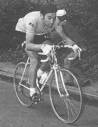
Merckx, to some, ceased to be human. friends, even some adversaires, defended him. Off the bike, he was reputed to be a thoroughly good egg once the carapace had been breahced. Onetime nemesis Ocana became a close chum. But Merckx was always the competitor; at cards, at football (he was a decent amateur player) and even at drinking. He later downplayed his bon viveur reputation but one friend recalls that one evening "Merckx even turned the drinking into a race... and he drank us all under the table."
As the writer Graeme Fife points out, Merckx won more major races than most modern racers ride in their entire careers. He couldn't just dominate tours - he routinely won classic one-day races, such as Belgium's Flèche Wallonne, Liège-Bastogne-Liège, Ghent-Wevelgem.
He dominated an era of superb riders - Zoetemelk, Ocana, Dutchman Hermann van Springel and the Belgian dangermen Roger De Vlaminck and Lucien Van Impe, all regarded as true greats of the sport. Proportinately, he won more races than anyone - only Hinault comes remotely close. Even given the advances in training, kit, diet and investment since Merckx's day, it seems improbable that any cyclist will ever match his extraordinary palmarès.
What's more, the tactical nature of modern road-racing means it is unlikely Merckx's relentless thirst for winning from the front and with panache will ever be equalled. Watching TV footage of Merckx now is, for cycling fans, like watchinng Jesus do his loaves-and-fishes number. You see it, but you don't quite believe it. Straight-backed and intent over the handlebars, Merckx's aerodynamic posture is all unbending attack mode, as passionate for a win as a callow schoolboy.
Merckx's one weakness was when a race concluded in the manic argy-bargy of massed bunch sprint; some commentators suggest that his habit of attacking as hard and asoon as possible sprang from a desire to avoid the indignity of being decked in one of these churning, frantic, 60km dashes.
Merckx, for all his punishining dominance and occasional lack of grace - he would grimly track a rider who, by cycling custom, was allowed to lead a race through his home town - was never really hated by the riders he often made look silly. Envied yes, hated, no. He had humility and a sense of honour. When Ocana quit the 1971 tour, Merckx refused to wear the yellow jersey that was his by rights the next day. Other riders groused periodically about his refusal to help them - cycling's bizarre and byzantine ethical coce dictates that if you help a rider win a race, he will help you win another. "Merckx never gave you anything," Bernard Hinault groaned recently to Vélo magazine. But he also helped out old foes in difficulties outside the sport, especially Ocana and former team-mate Roger Swerts. He complained publicly about low wages; bur rather for his faithful domestiques than himself.
French cycling journalists, for all their chauvinism, were unable to conceal their hero-worship. The French public, though, thought otherwise. Resentment of Merckx's dominance of the Tour grew to hatred; in 1975, he was punched in the stomach by a spectator at Puy-de-Dome when in pursuit of a then-record sixth title. Merckx claimed to be unhurt and unperturbed (although he was rewarded, and accepted, a symbolic one franc in damages).
The next day was Bastille Day, and in shrivelling heat on the climb to Col d'Allos (2240m) he tried to go after a break by Frenchman Bernard Thévenét. But then all France exulted as Merckx visibly cracked and fell back. A girl in a bikini at the roadside waved a hastily-scriblled placard: 'Merckx is beaten! The Bastille has fallen!"
Thévenet won the Tour and Merckx, despite winning enough classics in the next two season to chasten any current rider, couldn't postpone the inevitable. On March 19, 1978, before a minor race in Antwerp, the Oml;oop de Waasland, Merckx turned to his physio and said, "Pierre [Dewit]) this is my last race." Merckx finished 12th. "There you are, you can stull do it," jollied Dewit. But Merckx meant it. The two men packed up the gear and ended an area. Merckx was 32.
For a while, the champion was rudderless. He had stacks of dough, Miró originals (a recurrent passion), worldwide renown; yet for all the irritants of fame that turning the pdeals had brought, Merckx missed the bike, or,more accurately, he missed winning. His weight, perhaps inevitably, ballooned. One unsuccessful business venture nearly ruined him. So he returned to his métier; bikes. He set up his own bike factory (what name could lend more prestige) and re-entered the sport by the side-door. He nurtured his son Axel's career (having firmly told his younger brother to forget the sport 30 years previously) and watched with pride as the younger man progressed, winning bronze for Belgium in the 2004 Athens Olympics road race.
How did Merckx do it? After all, cycling and doping have always been bedfellows. But Merckx only tested positive three times - dubiously at Savona, accidentally after an erroneous prescription in 1974 and marginally in 1977, near the end. He didn't need dope - tests conducted around Europe by scientists confirmed what most had known and feared - Merckx had a nigh-on perfect metabolism for road racing, and the abnormally high levels of lactic acid in his blood enabled him to push his body to unknwon limits. Had he been doping, it is almost certain that he could have driven his bosdy too far and killed himself, as happened with the British rider (and Merckx's friend) Tom Simpson, high on Mont Ventoux in the 1967 Tour De France.
Furthermore, Merckx was a notorious insomniac; Claudine reports her husband's constant small-hours visits to the garage in order to fiddle with bikes. He tried to eat healthily, but loved red meat. Merckx was no fibre-carbs-and-wholemeal pasta fanatic. All of these factors militated against success, and all begged for pharmaceutial redress. But none, it seems, was required. The cyclist simply had "a phenomenal constitution" according to one soigneur, once racing competitively 54 days - count 'em - in a row.
The photographer and cycling fan Stefan Vanfleteren told me recently: 'have you seen Eddy lately? He's in great shape." I turned on the telly. There he was, helping out at the Tour of Flanders, diplomatically hopping between Wallonian and Flemish studios. He looked content with life's bounty; like a man whose 60 years have already contained enough for five lifetimes (bloody shorts and all) and who was looking forward to the third age as much as he ever looked forwartd to a race when he was in his prime.
The fire may be burning lower now, but Eddy Merckx is still a contender. No longer for 'greatest cyclist in history', for that's surely a foregone conclusion. Surely, now, it's 'greatest Belgian in history.'
Philip Hensher on Sting and crossover - classic!
great piece by Hensher. read about it here:
http://arts.guardian.co.uk/features/story/0,,1931560,00.html
http://arts.guardian.co.uk/features/story/0,,1931560,00.html
Prog in the press !
Read Jonathan Coe's up-close-and-personal memoir of prog in the raw at this address!
http://arts.guardian.co.uk/features/story/0,,1926051,00.html
http://arts.guardian.co.uk/features/story/0,,1926051,00.html
FACE STUFFIN': Piss This Up The Wall, Hewitt
Apart from Iraq, and the fact that Peter Mandelson has not been hunted down with dogs and removed to Kamchatka, the 'New' Labour policy that excised my gut instinct to always vote for that ruin of a party was the whimsical decision in 2002 not to prevent the Royal Mail from removing postal traffic from the railways; this oh-so-green government decided that juggernauts would do the job much better. No-brainer or what?
But Patricia Hewitt's latest weekend-headlines wheeze might top the lot. This relentlessly horrible woman proposes a hike in alcohol tax to prevent teenagers binging on alcopops. Not a ban on their sale; or even a targeted tax; or even a change in licensing; no, because Brit teenagers are the most feckless, overfunded, thick, obtuse, venal little bastards in Europe and can't hold their booze, everyone else has to suffer.
Quite apart from the puritan undercurrents of this ludicrous idea - an expectably public and classically vulgar krypto-Blairite kneejerk to a query from a group of children, ideal Mail and Express fodder that will play well in traditionally Labour heartlands like, er, Solihull and Bromley - it has shadows of Islingtonian preciousness so typical of Blairism. Of the world where children, even if they have just lynched next door's pekinese, are always, enervatingly, addressed as 'darling', allowed democratically-agreed bedtimes, or just simply to fuck everyone else's life up as they see fit. 'They're tiny adults, you see,' is the stock excuse. The children aren't to blame. They never are; responsibilities, strangely enough, don't ever seem to come with the adulthood starter pack their addled parents bestow on them.
And so who is to blame, and who will cop the flak? If this obscenity finds its way to law, the people who will bear the brunt are artisanal brewers, winemakers, distillers, cidermakers; rural pubs; real ale fans; gourmet restaurants; anywhere, anyone and anything to do with quality drinks. Tax alcopops themselves? The horror! What corporate panic would that spread? Would a government that has no problem with obscene wealth even consider doing such a thing?
Does Traquair House or Wye Valley or Mauldon's or Sedlescombe Vineyard or Dunkerton's Cider or Springbank produce technicolour yawns in our city centres after midnight? Silly question - so silly, Hewitt hasn't even considered it.
Hewitt's harebrained scheme envisages the most regressive taxation in Britain since the Poll Tax - screw the innocent and modest and exculpate the guilty and rich.
Stop this woman. Now.
But Patricia Hewitt's latest weekend-headlines wheeze might top the lot. This relentlessly horrible woman proposes a hike in alcohol tax to prevent teenagers binging on alcopops. Not a ban on their sale; or even a targeted tax; or even a change in licensing; no, because Brit teenagers are the most feckless, overfunded, thick, obtuse, venal little bastards in Europe and can't hold their booze, everyone else has to suffer.
Quite apart from the puritan undercurrents of this ludicrous idea - an expectably public and classically vulgar krypto-Blairite kneejerk to a query from a group of children, ideal Mail and Express fodder that will play well in traditionally Labour heartlands like, er, Solihull and Bromley - it has shadows of Islingtonian preciousness so typical of Blairism. Of the world where children, even if they have just lynched next door's pekinese, are always, enervatingly, addressed as 'darling', allowed democratically-agreed bedtimes, or just simply to fuck everyone else's life up as they see fit. 'They're tiny adults, you see,' is the stock excuse. The children aren't to blame. They never are; responsibilities, strangely enough, don't ever seem to come with the adulthood starter pack their addled parents bestow on them.
And so who is to blame, and who will cop the flak? If this obscenity finds its way to law, the people who will bear the brunt are artisanal brewers, winemakers, distillers, cidermakers; rural pubs; real ale fans; gourmet restaurants; anywhere, anyone and anything to do with quality drinks. Tax alcopops themselves? The horror! What corporate panic would that spread? Would a government that has no problem with obscene wealth even consider doing such a thing?
Does Traquair House or Wye Valley or Mauldon's or Sedlescombe Vineyard or Dunkerton's Cider or Springbank produce technicolour yawns in our city centres after midnight? Silly question - so silly, Hewitt hasn't even considered it.
Hewitt's harebrained scheme envisages the most regressive taxation in Britain since the Poll Tax - screw the innocent and modest and exculpate the guilty and rich.
Stop this woman. Now.
Thursday, October 26, 2006
U2 Stories
Two true stories about U2 - thanks Colin and Mike.
A mate's friend, a very beautiful but rather dim girl met The Edge at a party a few years back. God knows who approached who, but The Edge's first line was 'hi, I'm The Edge.'
Blankness. 'You're what?'
I'm The Edge.'
Incomprehension. 'I'm sorry, you're the - a - what?'
'I'm The Edge.'
'No, I don't get it. Edge of what? You mean you're -'
"Ah, feck it, just call me Dave.'
*
One of Bono's heroes was - maybe still is - Captain Beefheart, and on tour in the US many moons ago the frontman went to any lengths to be with his hero at whatever opportunity he got, making sure he was seen in the great man's presence, as though he were the one bestowing a favour of prestige and reflected renown on the Captain rather than the other way round; after a while this got on Beefheart's wick sufficiently for him to loudly ask his guitarist, Gary Lucas, within clear earshot of Bono; 'hey, Gary man, who's this damn Bongo guy keeps following me round?'
A mate's friend, a very beautiful but rather dim girl met The Edge at a party a few years back. God knows who approached who, but The Edge's first line was 'hi, I'm The Edge.'
Blankness. 'You're what?'
I'm The Edge.'
Incomprehension. 'I'm sorry, you're the - a - what?'
'I'm The Edge.'
'No, I don't get it. Edge of what? You mean you're -'
"Ah, feck it, just call me Dave.'
*
One of Bono's heroes was - maybe still is - Captain Beefheart, and on tour in the US many moons ago the frontman went to any lengths to be with his hero at whatever opportunity he got, making sure he was seen in the great man's presence, as though he were the one bestowing a favour of prestige and reflected renown on the Captain rather than the other way round; after a while this got on Beefheart's wick sufficiently for him to loudly ask his guitarist, Gary Lucas, within clear earshot of Bono; 'hey, Gary man, who's this damn Bongo guy keeps following me round?'
Mabon - Again!
saw Derek, Jamie and new flautist recruit Calum from Welsh folk-prog outfit Mabon at the Bell in Caerleon - consummate brillance, although Derek thought they'd lacked a little warmth. Pshaw!
The gulf between amateurs and pros is sometimes so enormous... these guys are the dog's. Derek's a fan of PFM and so is used to prog rock dynamics and harmonic devices, and it was, and is, all there. You could fill in the triads and harmonies with mellotron or Hammond organ in so many places, although Derek's rhyhtm guitar is pretty fine.
Great band- catch 'em.
The gulf between amateurs and pros is sometimes so enormous... these guys are the dog's. Derek's a fan of PFM and so is used to prog rock dynamics and harmonic devices, and it was, and is, all there. You could fill in the triads and harmonies with mellotron or Hammond organ in so many places, although Derek's rhyhtm guitar is pretty fine.
Great band- catch 'em.
Review: Fear Of Fanny
FEAR OF FANNY
BBC4, 24.10.06
You know how it is. You're gorbing down chocolate Hobnobs at 3 in the afternoon while watching Pocoyo, or maybe just blasted to the gills on g&t, and the phone rings. 'Darling, I've got you into the most wonderful thing on BBC4...' well, actually, probably only about 0.0000001% of the population fortunate enough to have sesames to publicly-visible media roles know how that is, the sort of scandalously-unaccountable people responsible for utterly forgettable TV like Fear of Fanny. The rest of us just cope, cling on and pray, rather like the hapless, cash-strapped post-austerity hostess-housewives that Fanny Cradock attempted to buck up by transfiguring the drabness of British grocery basket with its Wonderloaf and Fry's and tinned victuals into an illusion of continental culinary sophistication between the mid-50s and mid-70s.
It would be hard to name a programme so smugly located within a media demographic as this interminable and unfunny waste of 90 minutes, and also so indicative of decaying standards in TV comedy and drama. Picture the scene; Hampstead or Hoxton, a loft or a bar, Pulp or (if you're lucky) Goldfrapp on the stereo. Someone with no hair called Ben is probably in attendance. Right, people, ideas, please. Let's have some camp nostalgia, lots of lovely prop work; offbeat gay icon; what else? Of course. Plus, hey, it's about TV, the media, i.e. us.Two rather overrated actors from rather overrated TV comedies to fill mediocre roles that any one of 1000+ unknowns in Spotlight could fill, and who need the money considerably more than Julia Davis and Mark Gatiss as Fanny and chipboard-stiff sidekick and 'husband' Jonny.
Well, hurrah! Treble pretend-absinthes all round! Jackpot!
Jack shit, actually. Nancy Banks-Smith in the Guardian got it right, because nobody who watched the programme could possibly miss it - the props outdid the players and the action. Brand names - Birds, Bisto, Kenwood - were everywhere. Won't the designers do well at the Baftas! This was television not as drama or comedy or comedy-drama but college common-room chat circa 1991, 'hey, remember Amazin' Raisin Bars?' The violent, food-colouring mood of the sets seemed as irritatingly showoffy, postmodern and out-of-touch as a polytechnic arts degree project from the same era; 'it's meant to be ironic... getting in touch with the 70s.'
Julia Davis as Fanny was brittle and shrill by turns (what, really? you don't say!), phoning in a performance based seemingly on whizzing up a coulis of Patricia Routledge and Penelope Keith in a blender. Gatiss, as Jonny, didn't exactly have a Lear-esque emotional gamut to play with in the first place, but one senses he missed even the open goal of playing a man as interesting as moss. Uncomfortably, one imagines that Cradock, the real Cradock, will linger longer in the memory than Davis, Gatiss or this rather cheap little show.
Wasn't it all just terrible, the subtext went. Well, yes it was, but a better fist could have been made of showing us why than simply drawing a crude cartoon of petit-bourgeois snobbery. The very best TV drama is often snidely patronising - cf Mike Leigh - but crucially, it's funny and original too, obviously not contrived as a vehicle for two already overexposed B-listers. Leigh does not use cruelty for its own sake, especially that bestowed by hindsight, and rarely judges in the way that self-satisfied television like this (subsidiary subtext: 'God, look at that inedible, proletarian shit') cannot help but be. This is feel-good TV for people successful enough not to have to be reminded to feel good; on-screen superiority, and often misplaced, too.
Sorry, but just flicking bogies at the tastes and practises of one's parents' generation in this way -oh, baked Alaska, it must have been priceless!- just isn't actually, ipso facto, very funny. I remember the day my dad fell over in the bath in 1973 and pulled down a quasi-Art Nouveau shower curtain. It was piss-funny at the time, but I wouldn't even recreate it on YouTube. Davis and Gatiss and, more pertinently, those responsible for this fluff, can. it seems, scribble whatever graffiti they like over the past and have it onscreen for large sums of money in next to no time.
Watching this plate of leftovers - as empty a creation of networking and buddy-buddying hype as Heston Blumenthal's food - was to be reminded of the splendidly venomous words of Terence Davies in the press last week . His merciless flaying of 'third-rate' Ricky Gervais and Peter Kay seemed to ring truer and truer. All you need to get a film made, Davies bitterly descanted, was to be a TV comedian - never mind the quality, feel the reputation. True, Fear of Fanny was several centuries ahead of Sex Lives of the Potato Men - Davies's ne plus ultra of naff comedian hegemony - but once again, good money chases good money, or at least the perception of same, and the result is strangely unedifying.
In a decade, Fear of Fanny will be the answer to a question in a pub quiz. One hopes that the rather fine and elegiac commentary, The Way We Cooked, will still be fascinating media studies students, and rightly so.
Cradock's career collapsed after her onscreen butchery of the hopes of a naive young tyro chef on Esther Rantzen's proto-reality series Big Time (1976), the lifestyle equivalent of an Serengeti lion disembowelling an innocent zebra. Gordon Ramsay without the F-word, but with aspirates and a terylene floral-print. One thinks of how BBC commissioning editors must now approach scriptwriters; 'no, no, you fucking idiot. This is for Catherine fucking Tate and Bob fucking Mortimer, don't you fucking remember, you prat?' Fanny's marmish M.O. in the telly kitchen was also shortly to be usurped by the witty and emollient likes of Keith Floyd and Madhur Jaffrey. Let us hope that the cult of dolling up workaday fare with the garish decoration of B-list comedians like so many frills on an overdone turkey is also due the televisual chop.
BBC4, 24.10.06
You know how it is. You're gorbing down chocolate Hobnobs at 3 in the afternoon while watching Pocoyo, or maybe just blasted to the gills on g&t, and the phone rings. 'Darling, I've got you into the most wonderful thing on BBC4...' well, actually, probably only about 0.0000001% of the population fortunate enough to have sesames to publicly-visible media roles know how that is, the sort of scandalously-unaccountable people responsible for utterly forgettable TV like Fear of Fanny. The rest of us just cope, cling on and pray, rather like the hapless, cash-strapped post-austerity hostess-housewives that Fanny Cradock attempted to buck up by transfiguring the drabness of British grocery basket with its Wonderloaf and Fry's and tinned victuals into an illusion of continental culinary sophistication between the mid-50s and mid-70s.
It would be hard to name a programme so smugly located within a media demographic as this interminable and unfunny waste of 90 minutes, and also so indicative of decaying standards in TV comedy and drama. Picture the scene; Hampstead or Hoxton, a loft or a bar, Pulp or (if you're lucky) Goldfrapp on the stereo. Someone with no hair called Ben is probably in attendance. Right, people, ideas, please. Let's have some camp nostalgia, lots of lovely prop work; offbeat gay icon; what else? Of course. Plus, hey, it's about TV, the media, i.e. us.Two rather overrated actors from rather overrated TV comedies to fill mediocre roles that any one of 1000+ unknowns in Spotlight could fill, and who need the money considerably more than Julia Davis and Mark Gatiss as Fanny and chipboard-stiff sidekick and 'husband' Jonny.
Well, hurrah! Treble pretend-absinthes all round! Jackpot!
Jack shit, actually. Nancy Banks-Smith in the Guardian got it right, because nobody who watched the programme could possibly miss it - the props outdid the players and the action. Brand names - Birds, Bisto, Kenwood - were everywhere. Won't the designers do well at the Baftas! This was television not as drama or comedy or comedy-drama but college common-room chat circa 1991, 'hey, remember Amazin' Raisin Bars?' The violent, food-colouring mood of the sets seemed as irritatingly showoffy, postmodern and out-of-touch as a polytechnic arts degree project from the same era; 'it's meant to be ironic... getting in touch with the 70s.'
Julia Davis as Fanny was brittle and shrill by turns (what, really? you don't say!), phoning in a performance based seemingly on whizzing up a coulis of Patricia Routledge and Penelope Keith in a blender. Gatiss, as Jonny, didn't exactly have a Lear-esque emotional gamut to play with in the first place, but one senses he missed even the open goal of playing a man as interesting as moss. Uncomfortably, one imagines that Cradock, the real Cradock, will linger longer in the memory than Davis, Gatiss or this rather cheap little show.
Wasn't it all just terrible, the subtext went. Well, yes it was, but a better fist could have been made of showing us why than simply drawing a crude cartoon of petit-bourgeois snobbery. The very best TV drama is often snidely patronising - cf Mike Leigh - but crucially, it's funny and original too, obviously not contrived as a vehicle for two already overexposed B-listers. Leigh does not use cruelty for its own sake, especially that bestowed by hindsight, and rarely judges in the way that self-satisfied television like this (subsidiary subtext: 'God, look at that inedible, proletarian shit') cannot help but be. This is feel-good TV for people successful enough not to have to be reminded to feel good; on-screen superiority, and often misplaced, too.
Sorry, but just flicking bogies at the tastes and practises of one's parents' generation in this way -oh, baked Alaska, it must have been priceless!- just isn't actually, ipso facto, very funny. I remember the day my dad fell over in the bath in 1973 and pulled down a quasi-Art Nouveau shower curtain. It was piss-funny at the time, but I wouldn't even recreate it on YouTube. Davis and Gatiss and, more pertinently, those responsible for this fluff, can. it seems, scribble whatever graffiti they like over the past and have it onscreen for large sums of money in next to no time.
Watching this plate of leftovers - as empty a creation of networking and buddy-buddying hype as Heston Blumenthal's food - was to be reminded of the splendidly venomous words of Terence Davies in the press last week . His merciless flaying of 'third-rate' Ricky Gervais and Peter Kay seemed to ring truer and truer. All you need to get a film made, Davies bitterly descanted, was to be a TV comedian - never mind the quality, feel the reputation. True, Fear of Fanny was several centuries ahead of Sex Lives of the Potato Men - Davies's ne plus ultra of naff comedian hegemony - but once again, good money chases good money, or at least the perception of same, and the result is strangely unedifying.
In a decade, Fear of Fanny will be the answer to a question in a pub quiz. One hopes that the rather fine and elegiac commentary, The Way We Cooked, will still be fascinating media studies students, and rightly so.
Cradock's career collapsed after her onscreen butchery of the hopes of a naive young tyro chef on Esther Rantzen's proto-reality series Big Time (1976), the lifestyle equivalent of an Serengeti lion disembowelling an innocent zebra. Gordon Ramsay without the F-word, but with aspirates and a terylene floral-print. One thinks of how BBC commissioning editors must now approach scriptwriters; 'no, no, you fucking idiot. This is for Catherine fucking Tate and Bob fucking Mortimer, don't you fucking remember, you prat?' Fanny's marmish M.O. in the telly kitchen was also shortly to be usurped by the witty and emollient likes of Keith Floyd and Madhur Jaffrey. Let us hope that the cult of dolling up workaday fare with the garish decoration of B-list comedians like so many frills on an overdone turkey is also due the televisual chop.
Tuesday, October 24, 2006
Oi! Collins! NO!!!! (Genesis Reunion - More Observations (Draft)
A great band that gradually lost its way risks irreversibly tarnishing an already damaged legacy to rock, says Paul Stump
The clocks go back on Sunday. Winter's on its way. Charlton are bottom of the Premiership. If I needed anything to make things worse, it's the news that Genesis are to reform.
Ah, but hold hard there - Genesis used to be good. They were. This was before I knew they existed, but despite Peter Gabriel poncing around with a paper petunia on his head and songs like Supper's Ready hitting the 23-minute mark there was something whimsical, audacious and almost cute about them. Firth of Fifth (1973) is prog rock at its absolute ultimate, the conceits of daft solos and neo-Romantic excess condensed into a taut and brilliantly melodic and melodramatically thrilling eight minutes. Even when Gabriel left in 1975, the band were still viable, given guitarist Steve Hackett's leftfield harmonies and a sound not unlike a planet-sized electric violin crashing into the sun. Hell, even Phil Collins' voice didn't want to make me disembowel the nearest living thing. But Hackett quitting in 1977 and the onset of a syrupy blandness that makes Coldplay sound like Napalm Death spelt the end for Genesis as a musical unit; as a vast, Borg-like, galaxy-consuming monster, an absorber of phenomenal amounts of cash for phenomenally dull music it was just the beginning. And it's that Genesis, Collins, Mike Rutherford and Tony Banks, who have rediscovered their appetite for greenbacks this winter. One wants to weep. Does the world need this more or less than global warming?
Genesis were always seen as goody-goody, twee, musically informed by choir practise and parlour songs; the Carthusian background of Banks, Rutherford and Gabriel didn't help (Hackett remembers dressing-room rows degenerating into 'but you stole my pencil in the fourth year'). But as slightly eccentric middle-class young hippies they were infinitely preferable to the Vauxhall Vectra sound - reliable, teakalike, uninspired, devoid of novelty- they cultivated in the 1980s. The combination of garage-band guitar and orchestral mellotron strings with creepy paedophile undertones of Nursery Cryme(1971) and the proto-punk symphonic surrealism of the double-album The Lamb Lies Down On Broadway (1974) may be stridently ambitious, but in retrospect doesn't this sound much more interesting than the likes of Tonight Tonight Tonight and We Can't Dance and Another Day In Paradise - the musical analogue of Top Shop. Come on, admit it - not even Dire Straits were that boring; that was the whole point of prog and Genesis at their best, who practically embodied the genre - God, at least they tried something different.
It's hard to convey the bitterness amongst Genesis fans; those who swore the band died with Gabriel vs those who swore it died with Hackett (both groups share a wary rapprochement) vs those who remain faithful even unto now. Being Genesis fans, they don't, as a rule, go at each other with lengths of 2 by 4, although given the self-righteous, often semi-literate web ramblings of representatives of all camps, one feels that a Droogish bloodbath might be a more edifying sight.
Churlish indeed is he or she that denies that any Genesis product from Duke onwards was immaculate in presentation and production. The bugbear was the monumental blandness of language. Tony Smith's flawless management having steered them ably towards the mainstream from 1973 on, the departure of Hackett, the last real free spirit in the band, enabled them to fully form an FM-friendly musical language whilst retaining the late-Romantic chordal sequences characteristic of their oeuvre (Banks's contributions to And Then There Were Three in particular, Burning Rope most of all). Compare and contrast that with the likes of 1971's Fountain of Salmacis on the 1978 tour and there is a clear lineage of harmonic development and choice of notes.
The post-Three gap year, despite being filled by solo product of Banks and Rutherford (the actually rather good Smallcreep's Day) meant a renewed hearts-and-minds campaign; to wit, a small-hall UK tour and more radio-friendly, 'relevant' material. Collins' voice was remiked to add what was fondly, and laughably vainly, imagined to be a 'soulful' edge. Instead, he sounded - coincidentally - like a little white guy trying to be Otis Redding and failing at a karaoke night in Ealing. Hence the presence of the truly hideous Misunderstanding on 1980's Duke album. There were concessions to the faithful, with the chord sequences in Duchess, Behind the Lines and Guide Vocal reassembled in the ten-minute Duke's Travels/Duke's End setpiece. But as this aped in the studio the band's tendency to hybridise and medleyise older pieces, it seemed a little too pat, too corny, too part of what was now a showbusiness brand rather than a band.
Of course the attempt at the 'contemporary' was a risible failure; there were cosmic gulfs between the likes of The Pop Group and Genesis, for example. But the album, and the early-1981 Face Value by Phil Collins (possibly the most influential Genesis album of them all) sold so well that one could merely mouth plaititudes about appearing 'with it' while hoovering up money from FM airplay.
One of the saddest aspects of the whole Genesis decline - which is too tedious to rerehearse here - is that on one occasion Banks, Rutherford and Collins hit the target, dead centre. The opening to the single Mama from the Genesis album of 1983 was a modest and easily-overlooked triumph of combining neoRomantic minor-key harmonic progressions with blatty electronic minimalism, worthy of Eno at his best. I heard, I marvelled, I bought the album, I felt let down. God, if they could do it for one track, even for a fraction of a track, why not... couldn't they be more like the Associates, for heaven's sake?
Talk to any old pro and he will tell you how much he admires the likes of Invisible Touch and We Can't Dance for their 'professionalism'. The eyes will never smile, though. He knows, as any music-lover knows, that these records are horribly calculated music-by-focus-group tripe.
In a way it's hard to blame the band; they had refined their audience and manipulated their expectations ever since the arrival of the expert Smith, and by 1981, with Abacab (and its oh-so-minimalist-oh-so-not-prog-at-all-guvnor sleeve art), happened to chance on a chimera of pretend art rock gestures and empty soul-pop bolstered by hard work and an eye for innovation in presentation.
It worked; and Genesis, in a way, became a genre by themselves; they always had been, but by now the discrete colours, contours,patterns, textures had all been bleached clean, yet still there was a market, shared between the martyrable faithful and the vast constituency raised on FM radio in the 1970s and 1980s who didn't really like music anyway. Rarely has music sounded so boilerplate as that of Genesis in the 1980s; Steely Dan may have spent longer on their albums, but at least preserved the illusion of emotional involvement, posing lyrical questions, playfulness, an extra note on that ninth chord, whatever.
Genesis at their biggest were the most anonymous band in the world. Gabriel is a filthy-rich rock star but has always been an individualist; Hackett too, a modest, thoughtful musician moving into classical music. Both have clearly decided they have as little in common now with the exponentially-expanding Genesis monster of latterday Princess Di-patronage as they did three decades ago. Bravo to them.
Few band reunions can have been as gruesome to behold, few more financially unnecessary, few less likely to produce good music, a syndrome seemingly only defied by the fabulopus if unlikely recent Van Der Graaf Generator get-together.
Nothing would give me more pleasure than to hear a retread of the jolly, satirical martial stomp of 1971's The Return of the Giant Hogweed on this tour, and what has this writer reaching for the pills is that the classic lineup could no doubt rock the hell out of it; but given that the corpse of Genesis was so thoroughly Stepfordised from 1980 onwards, this is about as likely as Osama Bin Laden doubling with Tony Banks on mellotron, I think I'll pass and go into hibernation until it's all over. It's going to be a long winter.

Reddington's!
So. Farewell then, Reddington's Rare Records, Birmingham's best shop. I liked it even better on two sites. Not always the cheapest, but one of the best 2nd hand dives in the UK. And now, with Beano's in Croydon on the point of closure, it's time to put two fingers up to eBay. Time to save the bargain bins!
Sunday, October 22, 2006
Hey Mr Conductor (Part 4)
Working in America? Give the punters something lusciously local; Charles Loeffler's La Mort de Tintagiles. Now there's one snag to this otherwise wonderful 1895 work of proto-Impressionism - you'll need a viola d'amore player. Loeffler (1861-1935) originally decreed two obbligato violi d'amore. But then again he was an unconventional fellow; born in Russia of French parents, he emigrated to the States in his teens and became quite the dandy. His cosmopolitanism allowed him to absorb French and Russian influences, and Rimsky and Debussy are close to the surface of this garish, thrilling symphonic poem based on - who else, at this time?-Maeterlinck. Now if you're over there you're either touring with an excellent band or you'll have a home-based one close at hand, which should guarantee a high degree of technical capability. Good - cos the score demands it. Hair-raising, lavish, voluptuous - and if you're really stuck for a viola d'amore soloist, just try the same composer's Pagan Poem (1903). Just as luxuriant, just as OTT, just as good.
Recordings: Nelson (New World)(Tintagiles), Stokowski (EMI) (Pagan Poem)
Comparable repertoire: Ravel, Shéhérazade overture; Roussel 1
Like this? Try these: Gruenberg, Symphony No.2; Griffes, The White Peacocks
Recordings: Nelson (New World)(Tintagiles), Stokowski (EMI) (Pagan Poem)
Comparable repertoire: Ravel, Shéhérazade overture; Roussel 1
Like this? Try these: Gruenberg, Symphony No.2; Griffes, The White Peacocks
A Personal Aside
Now let's see. Two months into the blogosphere, this supposed revolutionising of communication... I am still dirt-poor, have had four responses from 147 postings; I still have a double-first-starred degree, three languages, features in all British broadsheets as well as Harpers and the New Statesman, five books, radio and TV work, unable even to pay for the repair of my dying laptop, let alone a relationship, and I am about to start filling little plastic bags full of nails to pay for Christmas and just possibly a few days away afterwards. Thank you, Mr Blair and all the fantastic editors out there for reminding me of the wonderful new world of new media, for opening up all these avenues of opportunity for me.
Observer 22.10.06 - Henry Porter
Now we know what we know, why is Blair still in office?
As more evidence of his role in the Iraq debacle emerges, it beggars belief that the Prime Minister hasn't been impeached
Henry Porter
Sunday October 22, 2006
The Observer
Over the course of little more than a week, we have learned that civilian casualties so far in the Iraq war may be more than 600,000; that Britain's Chief of the General Staff believes the conflict could break the army apart; that a federal solution to the growing chaos involving the effective dismemberment of the country is being openly discussed in America; that the US Iraq Study Group, headed by Republican grandee James Baker, is recommending that the US military withdraws to bases outside Iraq and seeks Iranian and Syrian help; and that Britain is now the number one al-Qaeda target, partly, it seems clear, as a consequence of events in Iraq.
There should be at least one universal response to this in Britain. Why is Tony Blair still Prime Minister after leading his country into such a disastrous war? Any large company would by now have got rid of a managing director guilty of a mistake on that scale. Any institution you care to name would have done the same. Why is Blair immune from the normal requirements of high office?
Why, instead of being allowed by the cabinet to establish six new policy committees designed to entrench his legacy, has he not been impeached and thrown out of office? Even if his Iraq policy was formed in good faith, the scale of the error surely requires us to ask him and all those concerned with this disaster to leave.
It doesn't matter now whether you were pro-war, strongly opposed to it or somewhere in between, the policy in the Middle East has been an unmitigated failure, an outcome that was built into the earliest planning for the enterprise. People's views four years ago don't count now because Britain is at the heart of a world-changing catastrophe and as far as our interests go, there has not been a single advantage, not even the one of keeping the special relationship alive.
How did we get here? The answer is still not entirely clear. We think we know that Blair manipulated the situation, but we still don't have all the evidence. What is needed is for people to come forward and for the past to be examined more intensively than before.
For instance, it is well worth returning to a memo written by a young diplomat named Matthew Rycroft, which is still significantly undervalued as evidence of the Prime Minister's drive to war and of the innate negligence of American planning for the period after the invasion.
Rycroft is now safely tucked away in Sarajevo as British ambassador to Bosnia. But in the summer of 2002, aged 34, he was Tony Blair's private secretary for foreign affairs. In this capacity, he attended a secret meeting at Downing Street which included Tony Blair, Foreign Secretary Jack Straw, Defence Secretary Geoff Hoon, Sir Richard Dearlove, the head of MI6, John Scarlett, the head of the Joint Intelligence Committee, Lord Goldsmith, the Attorney General, and Blair's military chiefs and the sofa cabinet - Alastair Campbell, Sally Morgan and Jonathan Powell. He then wrote a memo to his boss, Sir David Manning, Blair's chief foreign policy adviser.
It is really a minute of the meeting. The crucial passage reads: 'C [Sir Richard Dearlove, head of MI6] reported on his recent talks in Washington. There was a perceptible shift in attitude. Military action was now seen as inevitable. Bush wanted to remove Saddam through military action, justified by the conjunction of terrorism and WMD. But the intelligence and facts were being fixed around the policy. The NSC [the US National Security Council] had no patience with the UN route and no enthusiasm for publishing material on the Iraqi regime's record. There was little discussion in Washington of the aftermath after military action.'
The Downing Street Memo, as it became known, was published in the Sunday Times on 1 May 2005, five days before the general election. It certainly made an impact but by the end of that week, it had been washed away with the rest of the pre-election clamour. Blair had won a third term and his mysterious hold over the British electorate managed even to vanquish these revelations about British and American thinking eight months before the war.
It took a while for it to surface in the press in the US although its consequence was immediately grasped in the blogosphere. In Britain, the memo became part of the inconclusive miasma of the Hutton report into David Kelly's death and of the Butler review of intelligence on WMD; and it decomposed in the public's understanding at roughly the same rate. Indeed, one often wonders if Blair has been saved by the amount of material produced by public inquiries (Hutton is 740 pages; Butler 192). The more that is published, the more the issues blur.
But the memo is the goods. It establishes Bush's resolve to find a pretext for war, regardless of the facts on WMD and Saddam's links to terrorism. It further makes plain that there was little or no thinking about the postwar period, an error that now must be regarded as equal to or greater than the invasion. No surprise is expressed in Rycroft's account of the meeting about what was going on in America, which leads one to assume that among a very small group, the idea of invasion was a fully fledged possibility, even though Blair was assuring the public and cabinet colleagues outside the inner circle that nothing had been decided.
There was much more in the original Sunday Times report on the meeting. Jack Straw and Lord Goldsmith had doubts about the legal case for war, while Blair was committed from the outset to supporting US plans for regime change. At the time, no one seems to have remembered what Tony Blair had said in his evidence to Lord Butler's report into the intelligence on WMD, published eight months before the memo came to light. Blair said: 'I remember that during the course of July and August, I was increasingly getting messages saying, "Are you about to go to war?" and I was thinking, "This is ridiculous" and so I remember towards the end of the holiday actually phoning Bush and saying we have got to put this right straight away... we've not decided on military action.'
If not a direct lie, it is hardly the truth.
On the September dossier, Tony Blair said: 'The purpose of the dossier was simply to say, "This is why we think there is intelligence that means that this is not fanciful view on our part."'
It is clear now that he knew the Americans were fixing their intelligence for war and that he had to get his act together. In all the emails that emerged during Lord Hutton's inquiry, the pressure to make this case is clear. Here is one from young Rycroft: 'Part of the answer of "why now?" is that the threat will only get worse if we don't act now - the threat that Saddam will use WMD, but also the threat that Iraq's WMD will somehow get into the hands of terrorists.' Rycroft was helping to build the dishonest case he knew was being forged on the other side of the Atlantic.
There is a lot still to be discovered. I believe we need to know exactly what happened in 2002 in order to decide what we are going to do now. The collapse of allied purpose is clear, Iraq is in free fall, yet we still have not found out exactly how a small group of politicians and officials hijacked policy and took us to war against the clear wishes of the nation.
As the situation deteriorates in Iraq, Britain's need to distance itself from Blair's policy increases by the day. We need more answers. The call on the political establishment outside Number 10 is urgent. The House of Commons must show it is not been entirely debauched by party politics and bring the government to account and that includes Labour members.
In the meantime, my mailbox is open all hours for the slightest information that may cast light on the path to war.
As more evidence of his role in the Iraq debacle emerges, it beggars belief that the Prime Minister hasn't been impeached
Henry Porter
Sunday October 22, 2006
The Observer
Over the course of little more than a week, we have learned that civilian casualties so far in the Iraq war may be more than 600,000; that Britain's Chief of the General Staff believes the conflict could break the army apart; that a federal solution to the growing chaos involving the effective dismemberment of the country is being openly discussed in America; that the US Iraq Study Group, headed by Republican grandee James Baker, is recommending that the US military withdraws to bases outside Iraq and seeks Iranian and Syrian help; and that Britain is now the number one al-Qaeda target, partly, it seems clear, as a consequence of events in Iraq.
There should be at least one universal response to this in Britain. Why is Tony Blair still Prime Minister after leading his country into such a disastrous war? Any large company would by now have got rid of a managing director guilty of a mistake on that scale. Any institution you care to name would have done the same. Why is Blair immune from the normal requirements of high office?
Why, instead of being allowed by the cabinet to establish six new policy committees designed to entrench his legacy, has he not been impeached and thrown out of office? Even if his Iraq policy was formed in good faith, the scale of the error surely requires us to ask him and all those concerned with this disaster to leave.
It doesn't matter now whether you were pro-war, strongly opposed to it or somewhere in between, the policy in the Middle East has been an unmitigated failure, an outcome that was built into the earliest planning for the enterprise. People's views four years ago don't count now because Britain is at the heart of a world-changing catastrophe and as far as our interests go, there has not been a single advantage, not even the one of keeping the special relationship alive.
How did we get here? The answer is still not entirely clear. We think we know that Blair manipulated the situation, but we still don't have all the evidence. What is needed is for people to come forward and for the past to be examined more intensively than before.
For instance, it is well worth returning to a memo written by a young diplomat named Matthew Rycroft, which is still significantly undervalued as evidence of the Prime Minister's drive to war and of the innate negligence of American planning for the period after the invasion.
Rycroft is now safely tucked away in Sarajevo as British ambassador to Bosnia. But in the summer of 2002, aged 34, he was Tony Blair's private secretary for foreign affairs. In this capacity, he attended a secret meeting at Downing Street which included Tony Blair, Foreign Secretary Jack Straw, Defence Secretary Geoff Hoon, Sir Richard Dearlove, the head of MI6, John Scarlett, the head of the Joint Intelligence Committee, Lord Goldsmith, the Attorney General, and Blair's military chiefs and the sofa cabinet - Alastair Campbell, Sally Morgan and Jonathan Powell. He then wrote a memo to his boss, Sir David Manning, Blair's chief foreign policy adviser.
It is really a minute of the meeting. The crucial passage reads: 'C [Sir Richard Dearlove, head of MI6] reported on his recent talks in Washington. There was a perceptible shift in attitude. Military action was now seen as inevitable. Bush wanted to remove Saddam through military action, justified by the conjunction of terrorism and WMD. But the intelligence and facts were being fixed around the policy. The NSC [the US National Security Council] had no patience with the UN route and no enthusiasm for publishing material on the Iraqi regime's record. There was little discussion in Washington of the aftermath after military action.'
The Downing Street Memo, as it became known, was published in the Sunday Times on 1 May 2005, five days before the general election. It certainly made an impact but by the end of that week, it had been washed away with the rest of the pre-election clamour. Blair had won a third term and his mysterious hold over the British electorate managed even to vanquish these revelations about British and American thinking eight months before the war.
It took a while for it to surface in the press in the US although its consequence was immediately grasped in the blogosphere. In Britain, the memo became part of the inconclusive miasma of the Hutton report into David Kelly's death and of the Butler review of intelligence on WMD; and it decomposed in the public's understanding at roughly the same rate. Indeed, one often wonders if Blair has been saved by the amount of material produced by public inquiries (Hutton is 740 pages; Butler 192). The more that is published, the more the issues blur.
But the memo is the goods. It establishes Bush's resolve to find a pretext for war, regardless of the facts on WMD and Saddam's links to terrorism. It further makes plain that there was little or no thinking about the postwar period, an error that now must be regarded as equal to or greater than the invasion. No surprise is expressed in Rycroft's account of the meeting about what was going on in America, which leads one to assume that among a very small group, the idea of invasion was a fully fledged possibility, even though Blair was assuring the public and cabinet colleagues outside the inner circle that nothing had been decided.
There was much more in the original Sunday Times report on the meeting. Jack Straw and Lord Goldsmith had doubts about the legal case for war, while Blair was committed from the outset to supporting US plans for regime change. At the time, no one seems to have remembered what Tony Blair had said in his evidence to Lord Butler's report into the intelligence on WMD, published eight months before the memo came to light. Blair said: 'I remember that during the course of July and August, I was increasingly getting messages saying, "Are you about to go to war?" and I was thinking, "This is ridiculous" and so I remember towards the end of the holiday actually phoning Bush and saying we have got to put this right straight away... we've not decided on military action.'
If not a direct lie, it is hardly the truth.
On the September dossier, Tony Blair said: 'The purpose of the dossier was simply to say, "This is why we think there is intelligence that means that this is not fanciful view on our part."'
It is clear now that he knew the Americans were fixing their intelligence for war and that he had to get his act together. In all the emails that emerged during Lord Hutton's inquiry, the pressure to make this case is clear. Here is one from young Rycroft: 'Part of the answer of "why now?" is that the threat will only get worse if we don't act now - the threat that Saddam will use WMD, but also the threat that Iraq's WMD will somehow get into the hands of terrorists.' Rycroft was helping to build the dishonest case he knew was being forged on the other side of the Atlantic.
There is a lot still to be discovered. I believe we need to know exactly what happened in 2002 in order to decide what we are going to do now. The collapse of allied purpose is clear, Iraq is in free fall, yet we still have not found out exactly how a small group of politicians and officials hijacked policy and took us to war against the clear wishes of the nation.
As the situation deteriorates in Iraq, Britain's need to distance itself from Blair's policy increases by the day. We need more answers. The call on the political establishment outside Number 10 is urgent. The House of Commons must show it is not been entirely debauched by party politics and bring the government to account and that includes Labour members.
In the meantime, my mailbox is open all hours for the slightest information that may cast light on the path to war.
Subscribe to:
Posts (Atom)